Monday, November 9, 2015

The Quiet SEO Influencer: How to Use Visual Content to Build Brand Signals

visual-content-brand-signals-cover

As you obsess over link profiles and link-building to boost SEO, another form of search marketing has been quietly rising in importance. It’s not complicated. It’s not technical. And technically, it’s not even about search optimization.

It’s about brand signals.

Brand signals are becoming one of the foremost ways that a business builds trust and visibility on the web. Content marketers are the ones responsible for pushing their preferred brands to grow trust and authority.

In this article, I’ll explain what brand signals are, how they affect search marketing, why visual brand signals are essential, and how to implement a visual brand-signal strategy for your business.

What are brand signals?

Broadly speaking, brand signals happen when your brand is mentioned and discussed online. But it’s more than that.

In 2011, Rand Fishkin of Moz conjectured how Google’s brand-signal algorithm might function:

brand-signals-image

Some of the main categories that comprise brand signals include:

  • Mentions on the web – Your signal relates to where and how frequently your brand is mentioned. For example, if it is identified (but not linked) in a high-profile publication such as The Wall Street Journal or The New York Times, your signal is stronger. The more your brand is discussed on the web, the greater the brand signal grows.
  • Verifiable identity – With more opportunities to legitimize your brand, the stronger your signal is. Features such as business incorporation listings, a comprehensive contact information or About page, and a network access point (NAP) all are part of creating a verifiable identity.
  • Activity on social accounts – Both presence on social platforms and social buzz by users (“likes,” shares, mentions, tweets, etc.) enhance brand signals.
  • User queries – If a lot of people search for your brand name, Google and other search algorithms may adjust your brand’s visibility based on its popularity. Obviously, click-through rates and other user metrics would play into the event. For example, let’s say that your business has little presence on the web (few brand signals). You buy a Super Bowl ad. After it runs, your business’ brand signal jumps because viewers are searching for your brand. Or if your brand is consistently associated with certain keyword queries, Google may create a strong link between the keyword and your brand name.

Whatever the case, it’s evident that the growth of trust factors and evidence from experience that brand signals play a crucial role in search marketing.

While building brand signals is a whole new way to conceive of search marketing, I want to specifically address how visual content plays into the growth of brand signals.

What start with visual content?

Visual content is remarkably powerful in attracting viewers, which in turn create the necessary brand signals. Here are a couple reasons why.

Visual content can be immediately identifiable

Why do brands create logos with color, shape, and images? It’s because images connect instantly with the brain. They are memorable. Done well, logos also can permeate the company’s branding.

You don’t need to read the company name in text. You may not even need to see the entire logo to recognize the brand:

visual-content

Know what the brand is from this logo peek?

visual-content-apple

It’s Apple.

Visual content can be customized without significant resources

Small changes in visual content can produce a big impact without major cost or time commitment. Visual content also gets more attention from users on your social media channels, amplifying your brand’s reach.

Visual content dominates the web

Research emphasizes the value of visual content for users, particularly for millennials for whom “reading is no longer fundamental.” Social Media Week references it as a “shift to visual vocabulary where our streams are flooded with gifs, Instagram, emojis, and bitstrips. We’re moving to a very visual marketing period, and it’s driven by millennials.”

Want proof? Head over to BuzzFeed, which is bloated with gifs, lolcats, and picture lists, and has the biggest reach with millennials.

monthly-us-reach-buzzfeed

Click to enlarge

How does visual content build brand signals?

Brand signals aren’t just about mentions. They are about mentions that people see, recognize, and identify. Brand signals are for users, not algorithms. (Ultimately, though, algorithms factor in how users act on the web [i.e., how they follow your brand signals].)

When users see visual content associated with your brand, the signals are more likely to connect with them in a deeply memorable way. Your brand’s visual message is communicated to the brain in the fastest way possible. (Our brains process visuals 60,000 times faster than text.)

If my words aren’t communicating this concept sufficiently, maybe this visual content will:

graphic-textual-description

Source

Clearly, our minds are primed for visual content. That’s the No. 1 reason why visual content can build brand signals. It’s about the user, not just web crawlers that are locating and indexing.

What impact does this word have?

Microsoft

How much more powerful is this?

microsoft-visual

Source

Transforming a word (a brand name) into a visual by adding shape and color creates a more authentic brand experience.

Now we need to get down to brass tacks. How can your brand build signals with visual content?

A Visual Strategy How-To

Nothing in this section will blow your mind. In the interest of being as helpful as possible, I’m going to be as direct and simple as possible. These are the things you should be doing with your brand to expand your visual strategy and improve your brand signals.

Include custom images in every blog post

Does your brand’s blog content have a visual flair? Some of the most successful blogs create custom images for the posts. If you’ve ever been on Buffer, you probably recognize the title images for each article – a dark gradient image overlaid with the title. The consistent design creates a visual brand voice, boosting the brand signals.

custom-image-blog-posts

Add unique images and customize brand on social media

Since social media is a search component and your brand communicates through social media, it’s only logical that your brand should have unique images on these visually dominated channels.

Gatorade does a great job of creating brand signals with its social media visuals:

Almost all Gatorade’s Twitter content is visual, and it all contains that iconic orange.

Pinterest

If “visual content” and “brand signals” hung out, they would do it on Pinterest.

Building brand signals on Pinterest is huge. Take a look at how West Elm has optimized its Pinterest channel. Today, if you search for “West Elm,” the second organic result after its home page is www.Pinterest.com/westelm.

pinterest-west-elm

West Elm defines its brand on the visual content platform, developing a highly curated visual appeal for which the brand is famous.

pinterest-west-elm2

Brand signals happen in a big way on Pinterest. (And you can make a heck of a lot of sales, too.)

Instagram

Instagram is another one of those intensely visual social media platforms where your brand can develop its brand identity and the signals that make it memorable.

GoPro has equated its brand with strong visuals and its powerful Instagram presence proves it:

Instagram-gopro

Create infographics regularly

Today’s web users crave visual information, not just dry text:

visual information-vs-dry text

Source: Google Trends interest in “infographics.”

google-trends-infographics

Source

One of the most appealing and viral forms of visual content, infographics also should include your logo to further your brand’s visual signals.

Use big images everywhere you can

Adweek opines that since the web is visual, brands should be too. They point to Omnicom, a prototypical stodgy corporation, which has embraced a visual approach to its branding.

omnicom-group

Today’s popular brands have a strong visual flavor, regardless of their products or services.

Spotify sells music, but it has a strong visual approach to marketing as a quick glance through its website will reveal:

Spotify-visual-approach

An engineering brand, an unlikely niche for visual content and brand signals, also is using big images in its approach:

HG-engineering-visual

Big images are where it’s at. They have the power to communicate big concepts in a powerful, visceral way – strengthening your brand’s connection with users and subsequently growing your brand signals.

Conclusion

Make your brand stand for something, and make it visual. With every image Tweet, Instagram upload, and Pinterest pin, you’re advancing your visual content marketing strategy and building your brand’s visual signals.

The more you do this, and the better you get at it, the more powerful and popular your brand signals will become.

Learn more: Check out these articles for more information on visual content strategies.

How are you using visual content to build brand signals?

Want to learn more about how to improve your SEO in both traditional and non-traditional ways? Visit the Content Marketing Institute’s SEO content hub.

Cover by Joseph Kalinowski/Content Marketing Institute

The post The Quiet SEO Influencer: How to Use Visual Content to Build Brand Signals appeared first on Content Marketing Institute.

Sunday, November 8, 2015

How to Take Advantage of the Latest Blogging Trends

blogging-trends-cover

Blogging may be an elder statesman when it comes to the formats content marketers have at their disposal, but that doesn’t mean the technique is ready to go the way of the dinosaur. In fact, CMI’s 2016 B2B Benchmarks, Budgets, and Trends report found that 81% of content marketers include blogging among their techniques.


81% of content marketers include #blogging among their techniques via @cmicontent research
Click To Tweet


But, as with any tactic, blogging has been impacted by many shifts in marketing best practices, consumer behaviors, and technological advances. What are the latest trends in blog creation and usage, and how do these shifts impact blogging’s role in your content marketing strategy?

Orbit Media’s second annual survey of 1,000 bloggers aimed to answer these questions. While Orbit Media co-founder Andy Crestodina’s own summary focuses on changes over the past year, the results also reveal some trends that gradually have been gaining momentum over a longer time. Below are some of the findings that we at CMI found to be particularly intriguing, along with some actions that we suggest to help you take full advantage of this powerful content marketing format.

Long-form posts are becoming the norm

Finding No. 1: A typical blog post is almost 900 words – 10% longer than in 2014.


According to an @orbiteers survey, a typical blog post is almost 900 words – 10% longer than in 2014
Click To Tweet


Our perspective: Google continually tweaks its algorithm and its recommended best practices emphasize quality over quantity when it comes to getting your content to rank highly. But beyond search engine considerations is the fact that longer content is often more detailed content and the greater the detail, the more likely it is to be able to address audience interests, provide useful information, and answer the questions readers may have when they arrive on your blog.

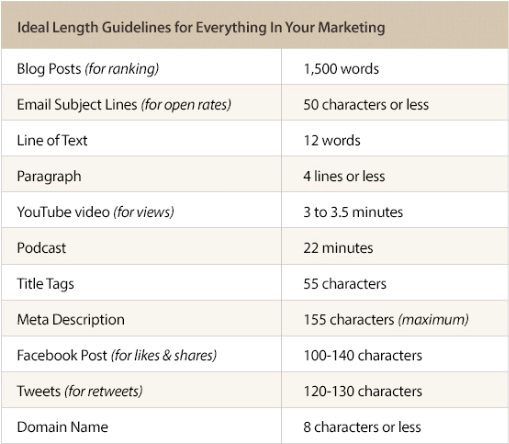
Our recommendation: Consider following Orbit Media’s recommendations on ideal lengths for various content formats: Search-optimized blog posts should be approximately 1,500 words. These best practices also are supported by the results of a study by serpIQ, which found that longer content ranks higher in Google search results than shorter content.

content-length-guidelines

Image courtesy of Orbit Media

Frequency is increasing, but daily posts are still a struggle for some

Finding No. 2: While more bloggers reported publishing on a daily basis in 2015 compared to 2014, the majority of bloggers (two-thirds) are still publishing less often than daily but more often than monthly.

Our perspective: Marketers may believe they need to create more content, more often, to be more successful. But, in fact, the opposite often seems to be the case. As Joe Pulizzi has emphasized time and time again, the goal is not to create more content but to create enough content to influence a desired behavior.

Our recommendation: Not every business has the resources to publish new content on a daily basis, but that doesn’t mean it can’t make a similar impact if it publishes less frequently. But remember, consistency is key when it comes to building a successful content marketing program (so important, in fact, that we made it part of CMI’s definition of the discipline). So whether you publish every day, every week, or every month, make sure you deliver your content on a regular schedule on which your audience can rely.

Learn more: An editorial calendar is essential to maintaining a consistent schedule for your blog content. Here’s everything you need to build one.

Bloggers are realizing the power of collaboration

Finding No. 3: Guest blogging doesn’t seem to be declining in popularity though only 6% of bloggers publish the majority of their original content as guest posts.

Our perspective: As Andy’s analysis points out, most bloggers (64%) write for more than one blog; so even though the majority of their content lands on their own site, they recognize the benefits that guest posting offers to help them build authority and expand their audience beyond their own blog readers.

Our recommendation: In addition to the thought leadership benefits, guest blogging can help secure backlinks from influential and authoritative websites a great way to raise your own blog’s search rankings. Getting guest posts published on top sites in your niche is not as difficult to accomplish as you might think (in fact, CMI is always looking for good contributors). Here’s a simple process for guest blogging that can help get you started.

Bloggers are marketing their marketing

Finding No. 4: Bloggers are increasing their use of promotion techniques that drive traffic to their posts including paid promotions, the use of which increased by 93% over the past year.

Our perspective: Social media continues to be the most common promotional technique used by bloggers 93% reported that they share their posts on social networks. But social isn’t the only promotion option that bloggers are leveraging. As the Orbit Media study shows, the use of SEO, email marketing, influencer outreach, and even paid promotional techniques all experienced a surge in popularity compared to 2014. This indicates that, while posting on social media remains one of the easiest ways to promote blog content (not to mention, it can be done for free), bloggers are realizing how important it is to take extra steps to get their writing into the hands of the target audience and help it stand apart from everything else competing for the audience’s attention.

Our recommendation: As Neil Patel reminds us, overlooking the importance of marketing your blog content is one of the top mistakes that can derail the success of your program. To ensure that your posts get seen and stand apart from your competition, try some of the non-obvious promotion tips recommended by Arnie Kuenn.

Images offer an oasis on a text-heavy landscape

Finding No. 5: Use of visual content formats including images, lists, charts, embedded social media, and SlideShare decks in blog posts is on the rise.

Our perspective: Adding visual content to your blog posts helps draw the eye and can help your audience engage with your content on a deeper level than with text alone particularly for viewers who prefer to scan articles rather than read long blocks of text. In fact, studies have shown that your content can generate up to 94% more views if you add compelling visual elements and graphics.

Our recommendation: Creating unique, powerful visual content for your blog posts doesn’t need to be a prohibitively complex process even if you don’t have a team of designers at the ready. Want some help? Give some of these visual content creation tools a try.

Did you find any of the results of Orbit Media’s survey to be surprising? What other techniques would you recommend to optimize the value of your blog content? Let us know in the comments.

Want  to improve your content marketing skills? Start with these two free e-courses about best practices – part of CMI’s comprehensive Online Training & Certification Program. Sign up for the full experience to access over 19 hours of must-know strategies, tactics, and best practices delivered by leading experts.

Cover image by Joseph Kalinowski/Content Marketing Institute

The post How to Take Advantage of the Latest Blogging Trends appeared first on Content Marketing Institute.
Saturday, November 7, 2015

This Week in Content Marketing: Consistent Content Is Key (And Most Brands Can’t Do It)

consistent-content-podcast-cover

PNR: This Old Marketing with Joe Pulizzi and Robert Rose can be found on both iTunes and Stitcher.

In this week’s episode of #ThisOldMarketing, Robert and I discuss several new podcasting developments – Google Play has added podcast distribution and Pandora is the exclusive streaming provider for the popular Serial podcast – and how this form of audio content is likely to evolve. Next, we question whether Google launched its YouTube Red subscription service primarily because of ad blockers – which is what YouTube superstar PewDiePie claims – or because of other factors. We also take issue with Mark Zuckerberg’s assertion that Facebook ads will soon become a welcomed part of the giant social channel’s user experience. Rants and raves include why Nike should have bought Grantland and IBM’s decision to buy the digital assets of The Weather Company. This week’s #ThisOldMarketing example of the week: Pro Football Talk.

This week’s show

(Recorded live November 2, 2015; Length: 1:02:15)

Download this week’s PNR This Old Marketing podcast.

If you enjoy our PNR podcasts, we would love if you would rate it, or post a review, on iTunes.

1. Content marketing in the news

  • Google gets back into podcast distribution (7:08): Remember Google Listen? The Google-made podcast app took your audio RSS feeds from Google Reader and played them on an Android phone, but the service was killed in August 2012. Today, Google is finally jumping back into the podcast game with Google Play Music Podcasts. I’m not surprised by this move, considering the exceptional demographics of podcast listeners. This article is paired with the next one.
  • Pandora is the exclusive streaming partner for Serial (9:00): Pandora, the world’s largest music discovery platform, is the exclusive streaming partner for the popular Serial podcast. This partnership offers new and exciting content for Pandora’s highly engaged audience of more than 78 million monthly listeners. Robert and I agree that this represents a pivot for Pandora, which until now has been focused on streaming music that is similar to its users’ tastes. We predict how podcasts may evolve during the next several years.
  • PewDiePie says ad blockers lead to YouTube Red (15:07): PewDiePie, a Swedish YouTube star who has racked up more than 40 million subscribers for his gaming videos, believes that Google launched its new YouTube Red subscription service as a way to bolster a revenue stream that is otherwise getting chopped by the growing popularity of ad blockers. PewDiePie estimates that 40% of his viewers use software that blocks ads, up from 15% to 20% five years ago. Robert believes this is one factor in Google’s decision, but probably not the primary one. We speculate on what really drove it to adopt this business model.
  • Zuckerberg talks about the crowding of ads vs. content (21:54): At a recent Vanity Fair event, Facebook CEO Mark Zuckerberg was asked whether he’s concerned about advertising crowding out content. He confidently responded that Facebook’s algorithm rewards higher-quality ads with more views; he believes the quality of ads will soon converge with that of its organic content, and will become a meaningful part of the user experience. Robert and I strongly disagree.

  • Brands: It’s you, not consumers (30:52): People aren’t as interested in participating with brands as the brands are in participating with them, according to new research from J. Walter Thompson. Some 58% of respondents said they were more likely to engage with brands online only if “it’s really easy and asks nothing of me.” Robert points out that we want content that will entertain and inform us, but we aren’t usually willing to do anything to get it. I reveal the missing piece that most brands aren’t good at, which prevents them from having stronger relationships with consumers.

2. Sponsor (37:45)

  • The power of A/B testing: It’s impossible to know which of your campaigns are the most effective if you don’t know which elements of your campaigns are contributing to these efforts and which are working against them. Don’t waste another second assuming what works and what doesn’t work. Download this e-book now from Marketo: http://bit.ly/marketo-ab-testing

The-Power-Of-AB-Testing-marketo

3. Rants and raves (40:00)

  • Joe’s rant: Last week, ESPN announced it was shutting down popular sports journalism website Grantland. In response, I wrote a LinkedIn column that explains how Nike, Under Armour, and other sports brands are missing a huge opportunity by not purchasing it. Grantland was getting five million visitors per month and had an incredibly loyal audience at the time of its demise. What upsets me most is that so few brands are thinking of the opportunities such an acquisition could provide.
  • Robert’s rave: IBM is a company that understands the strategic value of content. That’s why Robert is excited to learn that Big Blue is in final negotiations to purchase the digital assets of The Weather Company. The deal, worth over $2 billion, does not include The Weather Channel television property, but only its digital properties like the website, app, web infrastructure, and data. He explains that this deal is totally about data, but with an interesting twist from a content experience perspective.

4. This Old Marketing example of the week (53:39)

  • Pro Football Talk: Mike Florio launched the Pro Football Talk website on November 1, 2001, covering NFL news and rumors. It grew slowly but steadily, as Florio worked full time as an attorney and posted stories to PFT intermittently, as time permitted. In 2004, he made a New Year’s resolution to publish at least one story per day to PFT. Soon after, Sprint became its first sponsor, followed by NBC, which made a huge commitment to helping it grow. Today, PFT is completely integrated into the NBC Sports website, and its content is incorporated into NBC’s Football Night in America, Pro Football Talk on NBCSN, and PFT Live on NBC Sports Radio. PFT turned 14 years old on November 1, 2015. The key to its success was Florio’s decision to commit to a consistent publishing schedule. As Robert loves to say, excellent content, combined with a consistent publishing schedule, creates “anticipatory delight” in your audience. Pro Football Talk is an excellent Content Inc. and #ThisOldMarketing example.

pft-logo

For a full list of PNR archives, go to the main This Old Marketing page.

How do I subscribe?

itunes logo

stitcher logo

The post This Week in Content Marketing: Consistent Content Is Key (And Most Brands Can’t Do It) appeared first on Content Marketing Institute.

Thursday, November 5, 2015

5 Alternatives To Advertising On Facebook That Won’t Break Your Budget

5 Alternatives To Advertising On Facebook That Won’t Break Your Budget

When it comes to advertising on Facebook, small business owners may find themselves at a bit of an impasse.

Given the 123% increase in Facebook per ad costs last year alone, coupled with the 25% decrease in ad impressions, it’s harder than ever for smaller brands to reach out in an increasingly saturated (and expensive) market.

Since we here at BeFunky pride ourselves on being a small business, we decided to do a little research to come up with solutions to this pesky problem.

We came up with two solutions. The first? Launch a contest geared towards small business owners called Design Your Dream, in which businesses are invited to design their own business cards using our graphic Designer Toolset. The winner gets a fabulous public relations prize package designed to take their business to the next level, so we’re pretty happy with Solution #1.

Design your dream alternative to Advertising On Facebook

Solution #2, however, was a bit trickier, but we think we’ve done it justice.

Here’s the official BeFunky list of 5 new and creative ways brands can reach out beyond traditional Facebook advertising.

1. If you’re looking to connect with your ideal target audience… then try Reddit!

The most popular online forum since the dawn of the internet, Reddit is a place in which registered community members can go to debate everything from Game of Thrones fan theories to the best way to cook an omelette. While Reddit is traditionally viewed as a news and social media juggernaut – with an estimated 17 million users monthly – advertising options for small businesses are surprisingly cost friendly, with brands being able to buy in for as little as $5.

By utilizing the many specialized communities within Reddit – known as “subreddits” – small businesses can leverage Reddit’s massive fan base to connect with their ideal target audiences in unique, innovative new ways. The office furniture maker Haworth, for instance, chose to advertise on Reddit by creating a thread titled, “If you care about your gaming, you should care about your chair”.

Digiday alternative to Advertising On Facebook

(Source: Digiday)

With over 400 responses generated, the thread not only helped Haworth find and connect with their ideal audience, but it also gave them valuable feedback about their products, too.

Traditional ads on Reddit are also substantially lower than other ad platforms: with all Reddit ads at $0.75 CPM, advertising on Reddit is a fraction of the cost compared to platforms like Facebook, which usually runs at $1.25 CPM.

2. If you’re looking for more brand exposure… then try Product Hunt!

Product Hunt alternative to advertising on Facebook

(Source: Businessgrow)

Product Hunt operates under a simple premise: a website for savvy shoppers and product enthusiasts alike, it provides an online community in which people can get together to “geek out” over the next big thing. Members of the community can then upvote new products they like daily in a fashion similar to Reddit, with the product with the most votes then experiencing a “Product Hunt Boost”.

Product hunt 2 alternative to advertising on Facebook

Since the community is so large (with over a quarter of a million registered members and counting), a feature on Product Hunt can do wonders for increasing your brand awareness and reach. It’s a great place to go if you’re looking for more brand exposure as products that rank well can expect to see a huge increase in visitors to their site, with some brands reporting up to 10,000 website hits in just a 24 hour period after a feature.

While Product Hunt is great for certain types of products – especially for the tech, gaming, and publishing communities – membership is invite-only, so prospective brands looking to advertise are advised to engage in the community before submitting their products to the site.

3.  If you’re looking for increased engagement …then try Pinterest’s Promoted Pins!

Promoted Pinterest post alternative to advertising on Facebook

The market research firm Yankelovich estimates that a person living in the city 30 years ago saw up to 2,000 ad messages a day—compared to a staggering 5,000 today. Having to sort through such a large amount of information on a daily basis can lead consumers to experience ad fatigue, making it near impossible for small businesses to stand out. The solution?

Create stunning, visually appealing content. With 86% of B2B marketers focused on creating visually compelling content now or within the next 12 months, it stands to reason that the rise of visual content is certainly a trend worth capitalizing on.

Visual content alternative to advertising on Facebook

(Source: Hubspot)

But how can small businesses take advantage of this trend to help boost their brand engagement? By using Pinterest’s Promoted Pins, of course. With a stunning 42% of all women online having used the platform, Pinterest’s Promoted Pins are just like regular pins, only you pay to have them seen by more people. Small businesses can make their own visually arresting pins with programs like the BeFunky Designer, which offers users a series of pre-made templates from which to work with.

BeFunky tutorials alternative to advertising on Facebook

Promoted pins not only offer brands the chance to stand out in an increasingly saturated ad market, but they’re also “evergreen”. Since the pins are seamlessly integrated within the user’s native experience, they’re not viewed as intrusive, which means that all you have to pay for is the initial boost on your pin. After that, all the natural engagement you drive is free and continues to generate impressions, resulting in more traffic and increased brand awareness.

4. If you’re looking for more site traffic …then try StumbleUpon!

StumbleUpon alternative to advertising on Facebook

A popular content discovery tool that suggests tailored content based on users’ interests, StumbleUpon’s Paid Discovery feature is a surprisingly useful advertising tool for small businesses looking to get the most bang out of their buck. The Paid Discovery tool essentially operates like a PPC ad, with brands only paying when someone actually visits the site. It’s especially handy for brands looking to boost their site traffic because it allows brands to showcase their content without users ever having to leave the site: you’re simply paying to have your own native content served up to users more frequently.

Apart from saving brands the hassle of having to create eye-grabbing copy, the Paid Discovery tool’s real power lies in its “evergreen” quality: much like Pinterest, you only have to pay the initial PPC. Since StumbleUpon’s model is based on votes from users (thumbs up), the more users stumble on the content, the more likely it is to become discovered organically, potentially turning your content into a virtually unlimited free traffic stream. It’s a lesser known tool that, when correctly utilized, can generate astonishing results including a whopping 60,000+ visitors for a mere $0.2 cents per visitor over the course of a year.

Stefan Maescher alternative to advertising on Facebook

(Source: Stefan Maescher)

5. If you’re looking for a strong call to action …then try Snapchat!

Snapchat alternative to advertising on Facebook

Since it’s debut as a video sharing platform back in 2011,  Snapchat’s evolved quite a bit. With new, dynamic features like the popular discover tool rolled out earlier this year, Snapchat provides a great platform for enterprising brands to connect with their users like never before. As Social Media Examiner puts it;

“The limited lifespan makes Snapchat the perfect tool to deliver a call to action that creates excitement and a sense of urgency.”

Snapchat 2 alternative to advertising on Facebook

(Source: Snapchat)

This is great news for small businesses on a budget since it provides them with a multitude of new, creative solutions by which they can leverage their products. Brands can utilize the tool to offer users “sneak peeks” into new and upcoming products, for instance, or even use it to offer limited time exclusive promotional coupons. These techniques not only incentivize users to take action, but reward them for doing so as well, increasing the likelihood of repeat customers in the process.

While big brands will inevitably continue to wage the war against Facebook’s ever-changing advertising algorithms, there are still plenty of great, viable alternatives to Facebook ads that don’t have to cost you an arm and a leg. Small businesses can take advantage of these creative solutions to accomplish everything from increasing sales to boosting site traffic and beyond, proving that sometimes being the underdog is, in fact, a good thing after all.

And if you’re a small business looking to grow your brand in a big way, check out the BeFunky Design Your Dream contest to get the opportunity of a lifetime.

Design your dream contest alternative to advertising on Facebook

Author: Janelle Albukhari is a master content creator, social media guru and freelance travel writer all rolled up in one and currently works as the Content Marketing Manager for BeFunky.

Disclaimer: I’m compensated by BeFunky for this blog.


The post 5 Alternatives To Advertising On Facebook That Won’t Break Your Budget appeared first on Jeffbullas’s Blog.


Read Full Article: http://bathseoexpert.tumblr.com/post/132603315941

Wednesday, November 4, 2015

7 Insights for Social Media Success from Industry Experts

7 Insights for Social Media Success from Industry Experts

The most inspiring people of our time have learnt their trade from others…

They have listened, applied and adapted what others have already figured out and bundled it up in a nice little package with a ribbon of their personality.

If you want to stand out online you need to follow suit.

Find the most influential people in your niche, and learn what they already know, how they do what they do, and how inevitably they influence others to follow them. To believe in them.

In this article I have made a list of some riveting ideas for all things social media; by listening to webinars, wading through slide decks and reading blog posts – good, bad and mediocre.

These are the best tips I could find from the social media industry’s super heroes.

1. Always collect data

Collecting data for social media success

In a webinar on Social Media Today titled Drive Smarter Business Decisions with Social Data, Saurabh Shah, VP of Client Operations at Synthesio, answered questions on how enterprise data affects their social media decisions.

This webinar really takes social media listening to the next level. Saurabh said that brands need brain power to mine the mammoth amount of data acquired from social media, get actionable insights and take immediate steps. He stressed on making data valuable with real time analytics.

In the same webinar, Gregory Cohen, the Sr. Manager for Social Media & Influence at UCB shared the experiences of online communities for patients living with Crohn’s disease, Parkinson’s disease and epilepsy. According to him, just listening to communities can give us real time insights into how their members think.

Andrew Bates, Analytics Advisor for AARP’s social media department, also emphasized monitoring social conversations to identify real-time opportunities for engagement in news and events. Thus it seems enterprises will now need to hire data miners or use tools that provide insights on social media.

Here’s a list of 50 top tools for social media analytics for those who agree with these industry stalwarts.

2. Webinars are the B2B channel of choice

  • 34% of the US audience use webinars to make a purchase decision. (Source: Eccolo Media)
  • A Regalix poll in March heralded webinars as most suitable for B2B marketing.
  • Marketers are planning to increase their spending on webinars and virtual events by 46%.

Effective content graph for social media success

The effectiveness of webinars as a marketing tool is quite high. As the chart above shows, for any B2B business, webinars and videos are more effective than other marketing methods. According to Rachel Burstein, a Research Associate at the New America Foundation‘s California Civic Innovation Project, everyone from for-profit companies like LinkedIn and P&G to non-profits like Red Cross through to professional associations like the American Bar Association have been finding value from webinars.

However, many a time, listeners are checking their email or occupied on some task while the webinar is running in the background; so it’s important you keep their attention. Rachel has specified a list to make webinars a success.

  • Speakers must choose a useful topic
  • Webinars should be watched in a group
  • Make sure you have a Q&A round at the end

Many people believe having a presentation with pre-recorded audio in the background is enough for running a webinar. However this is far from true. A professionally hosted, quality webinar is an audio-video conference that allows moderated Q and A, private chats, polling sessions, etc. These webinars are not free but surely they are worth every penny spent on them!

3. Measure social ROI

Gary Vaynerchuck for social media success

Gary Vaynerchuk has invested in more than 50 tech startups including Twitter, Tumblr, Uber and Venmo. He grew his $3 million business to $45 million in just 5 years. Today he is a co-founder of VaynerMedia, a social first digital agency. Gary emphasized on understanding the importance of measuring social ROI especially for large companies and enterprises in this webinar. He said instead of hiring 500 people for social media, make use of advanced tools to measure social ROI.

Troels Kjems gives us an easy way to measure social ROI which is to measure desired actions like purchases, registrations, clicks, resource downloads, video views, social interactions, etc. These actions are what we can term as gains from social media. These can be derived for a period of a month or a year depending on the scale of your report.

Social Media ROI = Gains from social media – Social media marketing cost

Here’s an interesting infographic on the same topic.

4. Evaluate top brands

Segment services for social media success

Guy Kawasaki made it very easy to understand the 5Ps of social media with his webinar on building social media followers. He explained how Facebook is about people and Twitter about perceptions. You can also learn how the former chief evangelist of Apple used a clever segmentation strategy which makes it easy to understand the psychology of followers and use it effectively to increase their number.

5. Be gracious

Be gracious for social media success

The importance of linking or sharing can never be emphasized enough. Guy Kawasaki, in yet another webinar How to Master the Art of Social Media, explained the importance of being gracious. According to him, it is important to share a positive word about other people and websites. If however, you have nothing positive to share, it is better to stay silent.

6. Don’t over-use social media tools

Social media tools for social media success

With so many social media tools available, it is easy to get carried away and start using automation methods left, right and center. However, seamless integration of all these tools is easier said than done. Megan Clement, a Social Media Specialist at The Weather Channel and Eric Berkowitz, VP Solutions Engineering at Tracx, explained why it is worthwhile to have a comprehensive social media tool that takes care of everything from social media monitoring, to publishing and analytics.

What is important here is to understand that while enterprises go overboard in adopting various social media tools, small to medium businesses don’t consider any. If there is a tool that answers all or at least most of your important needs, it is wise to invest in at an early stage.

7. Identify your influencers

Best social monitoring tools for social media success

Lastly, it is important to identify your influencers. Influencers are people who have a lot of followers and are subject leaders. For instance, Vani Hari is an influencer on all things food but you can’t trust her on cars or finance.

Most people make the mistake of counting Twitter followers, measuring FB likes and checking comment volume. However, this only makes the basics. The trick here is to try multiple social media monitoring tools and figure out what works best for you. In this slide deck, Fresh Networks compares some mainstream tools, so you can choose the best tool to identify and connect with influencers in your industry.

Takeaways

From big data to influencers, it’s the little things that lead to social media success. The fact that we have well-publicized tips from thought leaders like Guy Kawasaki and Gary Vaynerchuk makes it all the more interesting. The hard work is done for you, now all you have to do is follow these tips and make your next social media campaign a success.

Guest Author: Michael Georgiou is the CMO and Co-founder at Imaginovation, a web design & mobile apps development firm in Raleigh, NC. He’s a dynamic business professional and entrepreneurial guru with proven success in creative strategy, online branding, project management, and communication projects in both the public and private sectors.


The post 7 Insights for Social Media Success from Industry Experts appeared first on Jeffbullas’s Blog.


Read Full Article: http://bathseoexpert.tumblr.com/post/132538945856

Tuesday, November 3, 2015

How to Leverage the True Potential of Landing Pages

How to Leverage the True Potential of Landing Pages

Conversion copywriters are people who write awesome landing pages with specific goals; either to convert readers into loyal followers or convert potential customers into paying ones.

For starters, no one is born as an awesome conversion copywriter. It takes a lot of training and trial and error to create powerful landing pages, regardless of what your goals are.

At the end of the day, it is all about conversion and how you leverage the true potential of landing pages. As a content marketer you don’t have an option but to figure it out. And if cost is a challenge for you, there are many free landing page services (such as this one from Spaces) that you can use for both blogging and eCommerce purposes.

But having a flexible landing page service isn’t enough. There are many factors which contribute to their success (or failure).

So, here are 8 very simple but powerful ways to create awesome landing page copy which will double your chance of a conversion.

Ready?

1. Craft killer headlines

Headlines are the first thing that your readers see. You know, the big bold words on the top of the page.

Most marketers (including myself) spend merely minutes writing a headline – and after that, you are done with it.

But here’s the thing. People don’t spend 20 minutes reading word by word on your landing page copy. They scan and skim through the headlines … most of the time.

According to this case study, most people only read about 20% of the text on an average page.

Now, take a moment to think about it.

Headlines, sub headlines and sub-sub headlines. You really need to craft the best headlines as those are the ones that readers will most probably read (and only read).

Important takeaway: Spend equal time (or more) creating headlines as you are writing the entire landing page copy.

2. Keep your writing simple (K.I.S.S. method)

Simplicity is the king. There is absolutely no reason for you to ‘run around the bush’ when you are trying to convey a message.

Instead, practice the ‘Keep It Simple Stupid’ (KISS) method when you are writing your next landing page copy.

Quoted directly from HubSpot, “Your most powerful writing skill is simplicity. Simplicity sells.”

One of the leaders in split testing niche, Optimizely does a great job in creating a simple landing page option that is focused on conversion. See below.

Optimizely example of landing pages

This form of landing page is not only simple but highly effectively for what-ever-goal you are trying to achieve.

Here’s another example from Neil Patel’s Quick Sprout blog:

Quicksprout example of landing pages

When you land on Quick Sprout’s homepage, you are only given one option which is “Do you want more traffic”. There aren’t other options that you can choose from and this will lead to a better conversion rate.

3. Write like a human and for humans

I am sure you want to crush your competitors and here’s how: You need to write like a human being because your readers are humans too.

Readers feel connected with these pages because it resonates with them. More importantly, readers would want to connect with real people, not just the copy itself.

Here are several ways you can write like a human:

  • Construct the landing page using language which is common to you and your target audience
  • Make sentences short and precise
  • Breaking rules of grammar (from time to time) is recommended if it makes the copy sound natural
  • Use expressions to further infuse human touches in the copy (for example, words like “seriously” and “wait a second”)
  • Avoid using jargon or industry terminology

4. Emphasize the benefits, not the product or service

One of the biggest landing page mistakes known to mankind is over-emphasizing the product (or service) itself.

For starters, majority of the readers do not care how good your product is. They only care of the benefits or outcomes that the product can provide.

When you promote your product directly to them, you are not going to give them what they want and expect.

So what happens when you promote the benefits instead? They get what they want and more importantly, that is a strong signal to them that he or she is in the right place for a solution.

Take a look at the images below from GoSpaces:

GoSpaces example of landing pages

GoSpaces 2 example of landing pages

At the top of the copy, the landing page emphasizes the ability to sell jewelry online with ease (with the sentence, “Spaces makes selling jewelry easy”). Right below the landing page is the benefits gained from using their services which goes from different payment methods to automation.

5. Use customer testimonials

Customer testimonials are great purchase motivators for any businesses. The truth is, testimonials are compelling because they show the readers (or potential customers) what they can expect once they take up the service.

Neil from Quick Sprout does a great job in creating customer testimonials by displaying them on his sidebar.

Quicksprout example of landing pages 2

Did you notice the bolded sentence, “500 million pageviews”?

That’s a powerful motivator for the readers to take action since most of Neil’s blog readers are constantly looking for ways to increase blog traffic and the sentence resonates perfectly with them.

PostPlanner, the popular Facebook engagement tool has a testimonial tab which highlights testimonials from influential marketers. This increases the trust level with potential customers.

Post planner example of landing pages

6. Ask readers to take action

This last part is crucial. This is the gem, climax or whatever you call it.

You are only considered successful in creating a landing page when your readers take a specific action, which could range from clicking the sign up button to purchasing a product.

And what matters most here is using the right words. The choice of words used on the Call-To-Action button will determine the chance of you getting a conversion.

Some words would indirectly encourage the person to click on it while other words may just turn the reader off.

So, what type of words encourage readers to take action?

There is only one trick in this, which is your action words should always correspond with your offer.

Here are some examples:

  • Download This eBook
  • Reserve Your Seat
  • Buy Now

Udemy serves as a portal for selling online courses and the most common Calls-To-Action (CTA) that they use are “Take This Course”.

uDemy example of landing pages

The CTA that Udemy use is a great offer-related action which potential buyers will resonate with.

Sum up

Leveraging the true potential of a landing page is not that hard and many professional marketers are using landing pages to take their business to the next level.

Are you constantly trying to hack conversions of your landing pages? Leave a comment below on the tricks you use and let’s talk about it!

Guest Author: Reginald Chan is a creative writer residing from Asia, loves all aspects of digital marketing and social media. In his free time, he is either researching for marketing topics or planning for his next travel destination. Take a peek at his blog or follow him on Twitter


The post How to Leverage the True Potential of Landing Pages appeared first on Jeffbullas’s Blog.


Read Full Article: http://bathseoexpert.tumblr.com/post/132476272546

Monday, November 2, 2015

7 Fundamental Security Errors Bloggers Must Stop Making

7 Fundamental Security Errors Bloggers Must Stop Making

Security should be a top priority for you as a blogger.

A single hack can set a blog back months if not ruin it entirely.

These are the reasons you should keep security as a primary concern:

  • Readers won’t trust a blog that is a known location where cyber criminals lurk.
  • Readers rightfully demand that any information they give you is kept safe.
  • If your blog is taken over by hackers, there is no guarantee you can get it back.
  • Thousands of websites are hacked every day, many of them with stronger security than your own, due to human error and basic mistakes.

You might understand if a hacker gained access to your blog through a series of clever and intricate actions, but unfortunately, in most circumstances, a compromised website is the result of an easily avoidable mistake.

Bad habits are the death of countless blogs, and bloggers looking to make their websites among the best in the world need to kick the bad habits early on.

Here are seven of the most severe security errors bloggers need to stop making:

1. Neglecting to use a virtual private network

Bloggers often update their blogs while they are in cafes, travelling or otherwise using public networks. This is convenient and allows for fast response, but public networks are extremely risky to use from a security standpoint.

Cybercriminals often set up shop on a public network and use a “sniffer” program to intercept any data being sent over the network. This means, without protection, hackers can gain access to your passwords, usernames, personal information and reader information. None of this is acceptable, therefore you need to use protection whenever you use a public network.

The best protection is a Virtual Private Network (VPN), which connects your device to an offsite secure server using an encrypted connection. Using an offsite server to handle your requests means that no one will be able to track your online activity and that any hackers on public networks won’t be able to see a thing.

There are quite a few VPNs on the market for bloggers to choose from, so I recommended you read reviews from a website such as Secure Thoughts or Computer World to help you make a decision.

2. Using a vulnerable device to administrate your blog

It is important to remember the basics necessary to secure a device, such as the following:

  • Use a strong password on any account or device you use. One account breach can easily lead to many others, including your blog. Your email is especially important.
  • Any other verification measures should be to the highest standard you can provide. Make sure no one can guess your security questions, and try to personalize your other measures as much as possible.
  • Any device used to administrate your blog should have a security suite or program installed. They should be updated as often as possible, and free programs are not recommended.
  • Manual checks of all files should be done regularly, so that you can detect intrusion and gain a better knowledge of the files on your system.

3. Not using security plugins (or using the wrong ones)

You are likely already using plugins of some sort on your blog, but the plugins currently available to you are greatly varied and not all are to your benefit. Many could actually be malware or exploits waiting to happen, containing security holes built into the programming so hackers can get into your website.

On the other hand, there are plenty of good security plugins out there if you are careful about looking. They can often protect you from different types of attacks and solve security problems WordPress has ignored thus far.

I recommend every blogger utilize at least one of the following plugins:

  • Wordfence is the most popular security plugin on WordPress, and with good reason. It has advanced scanning for your blog, malware protection, the ability to look for backdoor entry points and a lot of other smaller options that will shore up the defenses of your blog. Many would call this a must-have plugin, and it would be wrong to disagree. There is a premium option, but either version will do your blog good.
  • WP Security Scan is one of the best and simplest tools available for free. It will scan your blog and let you know of any potential weak points. In most cases, it will then allow you to make easy changes to solve those particular problems. It is a great option for new users looking to learn more about security while protecting themselves.
  • Sucuri WordPress Security’s main advantage is that it will log any and all activity on your blog. If there is an intrusion, you will know and be able to respond. It also has suggested actions that you can activate easily in case you are new to WordPress security. It is absolutely worth your consideration!

Wordfence to stop security mistakes for bloggers

From the Wordfence Website.

4. Not updating plugins

Just because you downloaded a plugin doesn’t mean that you can ignore it from there on out. Plugins are no different from any other programs, and they require constant monitoring and updating in case any new exploits arise. Hackers will take advantage of anything that comes up and use it to take over your blog.

Any plugins that aren’t updated frequently are worth abandoning. Chances are you can find a suitable replacement that keeps the safety of your blog in mind. It is recommended that you do a check of any relevant plugins every couple of months. Just compare the version you are using with the current version.

5. Having “Admin” as a username

This one is short and simple. Many blog administrators still have “admin” as their username (the default). This makes the lives of cybercriminals so much easier, as they don’t have to guess your username. They’ll also assume you didn’t put much work into the security of your blog if you didn’t change your username, and thus they will think it is easy to attack.

Double check this right now, and make the change to something less common.

Admin as user name security mistakes for bloggers

6. Neglecting to moderate your comments section

The community that forms around your blog is a greater indicator of security than you think. Not only will a well-moderated comments section improve retention rates among readers and give you ideas on how to improve your blog, it will let you know if there is a problem. Your readers might be the first people to notice an oncoming threat, and if you catch it in time, you can prepare.

You also need to be wary of attacks that come about via comments on your website. Cybercriminals can post links in comments that lead to problematic websites, malware, ransomware and other things your readers might blame you for if they are attacked. Delete them as soon as possible, and remember to check your comments every day or get notifications sent your way on the matter.

7. Not having a backup of your data

No matter what preparation you have, there is the inevitable fact that you are going to encounter problems when administering your blog. Whether these problems are based on malice or result from nature doesn’t matter. You need to have a plan of action should your blog go down, so you can get going again.

Every blogger should have a backup of their data. This will allow you to safely take your blog down if you detect problems or a breach and start again from a recent record. There are several ways you can store your data in a safe manner:

  • You can use the cloud so that your blog will not be in danger of any damage to your computer systems or external storage devices. The problem with this option is that the cloud is notoriously unreliable when it comes to security. Your data is out of your hands, and you have to decide whether that is a good or bad thing.
  • You can get a flash drive or external hard drive to store all of your blog’s information on. What exactly you will need depends on the size of your blog, but just make sure that it is a sturdy piece of equipment. Hackers won’t be able to get to it if it is locked away in a safe!
  • If you are extra concerned about something happening to the data on your blog, you can get both solutions. You will still need to worry about the data security of the cloud, but you can nearly guarantee the safety of your blog’s information.

USB image for preventing security mistakes for bloggers

This little stick might be one of your best tools.

Sum up

When it comes to protecting your website, time is of the essence. Cybercriminals aren’t going to wait, and many of the mistakes mentioned above can be rectified quickly. An investment of time and resources in blog security now will pay dividends in the long run.

What are you doing to protect your website? Are there any bad habits you think you can break yourself out of?

Let us know in the comments below and share with your fellow readers.

Guest Author: Cassie Phillips is an internet security enthusiast and blogger. She has learned a lot about blog security from running her own blog and enjoys sharing her knowledge with other bloggers so they don’t make the same mistakes.


The post 7 Fundamental Security Errors Bloggers Must Stop Making appeared first on Jeffbullas’s Blog.


Read Full Article: http://bathseoexpert.tumblr.com/post/132408499516