Monday, February 11, 2019

8 Tips (and a Few Tools) for Getting S**T Done

Where do they find the time? Paragons of productivity in content marketing share their secrets to help you tackle that seemingly endless list of tasks. Take a moment (and a breath) to peek over their productive shoulders. Continue reading

The post 8 Tips (and a Few Tools) for Getting S**T Done appeared first on Content Marketing Institute.

Friday, February 8, 2019

6 Books to Help Content Marketers Attract Conversions, Grow Profits, and Work Better in 2019

One roundup list wasn’t sufficient to capture the best books in 2018 for content marketers. Here are six more books with examples, tips, and wisdom to upgrade your content marketing skills. Continue reading

The post 6 Books to Help Content Marketers Attract Conversions, Grow Profits, and Work Better in 2019 appeared first on Content Marketing Institute.

Thursday, February 7, 2019

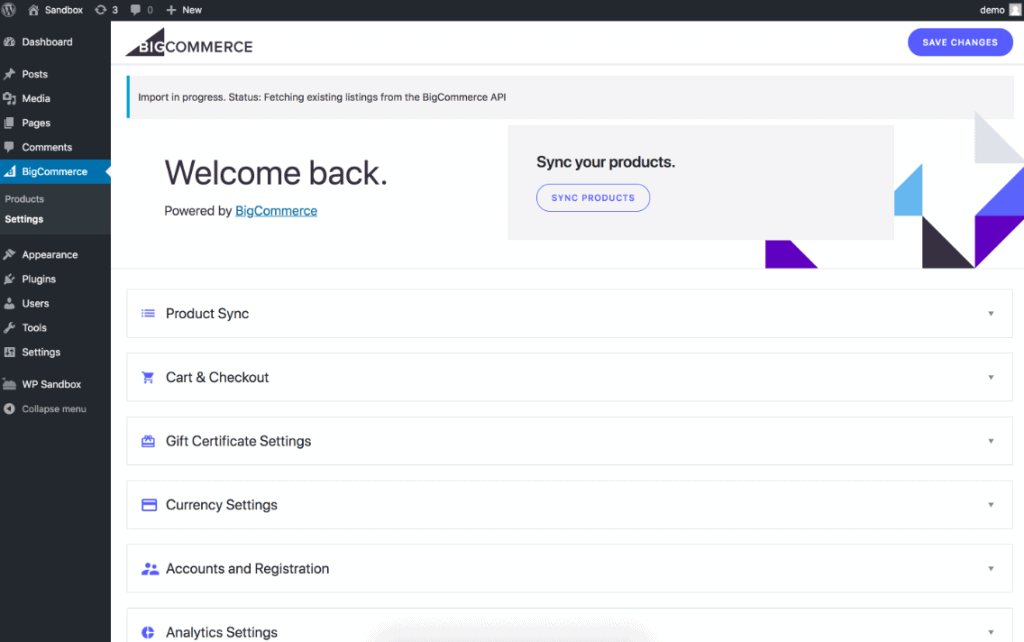
BigCommerce for WordPress: A Scalable Ecommerce Solution

After hours upon hours of hard work, you’ve now grown your WordPress site into a content powerhouse. Your next step is to turn it into a money-making machine.

You shouldn’t have to sacrifice your WordPress website’s content and design when launching an ecommerce store.

The team at BigCommerce, in collaboration with Modern Tribe, recognized the need for a seamless ecommerce solution for WordPress websites. Together they built BigCommerce for WordPress.

What is BigCommerce for WordPress?

BigCommerce for WordPress is a WordPress ecommerce plugin which adds fully customizable ecommerce functionalities to the website you’ve already built.

Rather than starting from scratch, the headless plugin works with your website’s existing WordPress themes and connects them with your web host to provide a consistent shopping experience for users. This means there’s no need to spend time reworking or redesigning your new online store; it will already look perfect.

Plus, thanks to the plugin’s wealth of features, you receive an easy-to-use and understand front-end application through WordPress.

You’ll never have to rely on extra resources or outside applications to manage your inventory, deal with servers, or negotiate with payment processors. Everything you need to run your store is operated via a single control panel in BigCommerce for WordPress.

BigCommerce for WordPress makes ecommerce easy, scalable, and for everyone.

Why Choose BigCommerce for WordPress?

Sure, there are other ecommerce platforms, ecommerce plugins, open source solutions, and free website builders on the market.

But none provide the completely streamlined and customized capabilities of BigCommerce. Due to the plugin’s “headless” design, it provides a multitude of benefits for brands, developers, and companies working to reach their ecommerce goals.

Completely Customizable
Your online store should provide shoppers with an uninterrupted shopping experience through captivating website design, blog content, and user experience. Since BigCommerce for WordPress integrates with most existing WordPress website themes, you are able to customize your store to appear and function exactly as you desire.

With BigCommerce for WordPress, there’s no need to worry about your shop’s functionality messing up the appearance and flow of your site. Plus, you’ll spend less time finagling with the theme and more time growing your sales.

Also, the plugin values and supports the WordPress way of offering complete access to key plugin files. You can override plugin files for total customization of your store. AMP pages can also be used to improve the speed of your BigCommerce for WordPress online shop and provide a pleasant online experience for shoppers.

BigCommerce for WordPress is also Gutenberg compatible, making it accessible for all users, regardless of which version your website currently uses.

Streamlined Ecommerce Functionality
Everything you need to successfully operate an online store is included in the BigCommerce for WordPress plugin. There’s no need for WordPress tutorials or juggling multiple systems and applications to operate a single store.

Free up your time and server space by accessing all aspects of the ecommerce process, including:

Inventory Management
Mobile Ecommerce Design
Payment Processing
Shipping and Fulfillment Operations
Security and PCI Compliance
Website Analytics and Conversion Rate Tools
Order Management
Email Marketing Integrations

And, the ecommerce plugin allows for multi-site management from a single control panel. Scale your ecommerce business and generate sales from multiple websites without the hassle or headache.

Plus, by having more built in functionality than other WordPress ecommerce plugins, say goodbye to multiple plugin/application subscription fees for various parts of the ecommerce funnel.

Instead, free up valuable resources you can invest elsewhere in your business.

Multi-Channel Selling

Today’s dynamic ecommerce platforms requires companies to be competitive. Using the BigCommerce control panel, businesses can also cross-sell their products simultaneously on major markets such as Facebook, Amazon, Pinterest, eBay, and more. Selling on multiple channels within WordPress is an excellent strategic ecommerce marketing tactic to drive more sales.

The ability to reduce ecommerce inventory errors through automatic inventory syncing and cross-referenced order and fulfillment management capabilities makes multichannel selling simple.

Secure Peace of Mind

The internet is becoming an increasingly scary place full of compromised personal information. The last thing you want is for your ecommerce solution to be vulnerable to attacks. Shoppers will not trust an ecommerce store that doesn’t protect personal and banking information with the latest security software.

Fortunately, BigCommerce for WordPress assists your online store with every aspect of providing a secure shopping experience including PCI (Payment Card Industry) and GDPR (General Data Protection Regulation) compliance.

Providing shoppers with a secure experience and payment processing solution leads to satisfied shoppers who turn into loyal customers.

Scale Your Ecommerce Efforts

Due to its design and myriad features, BigCommerce for WordPress provides website owners with a scalable ecommerce solution. As your company and ecommerce sales grow, the plugin adapts to meet your needs.

This scalability is possible thanks to the plugin’s “headless” design and development. These types of plugins are generally faster and use less memory to operate. This means when you create a website, you won’t be slowed down by endless background operations and tasks, bogging down the front-end experience for shoppers.

Plugin users are able to load and manage unlimited products, hundreds of SKUs per product, and more with ease. As your store grows, so do the capabilities of BigCommerce for WordPress. The possibilities are endless as you scale your operations.

Also, by using a single online portal within BigCommerce, your website won’t be overloaded with extra files, applications, and other shared resources. Instead, you’re able to successfully scale your ecommerce business as needed without worrying about site speed or server resources.

Plus, with the plugin’s “out of the box” ecommerce functionality, it also connects directly to existing websites via the BigCommerce network of apps and catalogs of fully-integrated payment and shipping methods. On top of customizing your shop’s front-end appearance, you’re able to easily tailor your shipping, handling, payment, and other settings to meet your business’ needs.

Save on Processing Rates
Anyone who’s dealt with accepting credit cards online knows how much of a nuisance the fees can be.

By partnering with BigCommerce for WordPress, you can save with the lowest pre-negotiated processing rates. The plugin also integrates with BrainTree to provide competitive rates with PayPal, Apple Pay, and Visa Checkout for a secure and affordable checkout process. For a more advanced checkout, you can implement an ecommerce checkout tool like Satalytics, mobile-first design, and even esignature software to increase sales.

BigCommerce for WordPress: Making Ecommerce Accessible and Scalable for All
While ecommerce was once troublesome for WordPress websites, the simple but powerful BigCommerce for WordPress functionality opens the door to new opportunities for content and commerce.

Create secure, seamless, and content-first shopping experiences for your customers by adding BigCommerce for WordPress to your site. You’ll be combining the very best of content and commerce and setting your site up for the future.

Adam Enfroy is a writer, content marketing consultant, and manages strategic partnerships for BigCommerce. With 10+ years of digital marketing experience, he’s passionate about leveraging the right strategic partnerships, content, and software to scale digital growth. Adam lives in Austin, TX and writes about launching, growing, and monetizing your blog at adamenfroy.com. You can connect with him on Twitter and LinkedIn.

Original post: BigCommerce for WordPress: A Scalable Ecommerce Solution


This post is courtesy of: https://www.dailyblogtips.com

How To Leverage Social Listening To Grow Your Business

How To Leverage Social Listening To Grow Your Business

Social listening sounds like a term coined to describe those friends who, when you’ve fallen on hard times or otherwise need a friendly ear, pull up a pew and graciously listen to your woes. What it really describes, of course, is the process of monitoring and extracting insights from social conversations which business owners then use to inform their overall strategy.

By keeping tabs on conversations that touch on specific keywords and topics relevant to your business and industry, you can ensure the content you produce hits your audience between the eyes (in a good way). Social listening is also an invaluable means of sourcing high-profile influencers, performing market research, gauging interest and sales opportunities, reinforcing brand values, tracking the health of your business and improving customer satisfaction. Few modern digital tools influence strategic business decisions quite like social listening.

Speaking of influence, the pervasive influence of social media on society at large continues to grow. According to Brandwatch, there are over 3 billion active social media users, with the average daily time spent on social totaling nearly two hours. Retail brands, reflecting the habits of these tweet-obsessed consumers, have migrated to the social sphere en masse, with 91% of retail companies now using two or more social channels and 81% of small and medium businesses active on some kind of platform.

As a business owner, why wouldn’t you want to exploit that market to the fullest? Therein lies the appeal of social listening: monitoring and responding to conversations occurring in your space allows you to harness the power of social media to significantly grow or build your profile.

If you’re interested in leveraging social listening to grow your business, you’ll first need to find an effective tool. In this blog article, we’ll tell you about four of the very best listening tools you absolutely must consider.

1. Awario

Awario for Social Listening

With plans starting at just $29/month, Awario is an affordable, Enterprise-level web monitoring platform that promises to get you up and running in no time. One of the many great things about Awario is that it offers a free Leads module as an add-on for all plans. Leads is a particularly clever feature, in that it lets you describe your product and specify competitors before creating a ‘mention monitoring alert’, a very useful tool for social selling. To harvest leads, the tool combines your product descriptions and competitors’ brand names with predictive insights to find prospective clients who are requesting advice about a product or service you offer; it also flags up consumers who are complaining about one of your competitors, offering scope to essentially swoop in and solve their problem.

Of course, it pays to fine-tune your Lead settings to ensure you’re being fed the kind of results you want. But when you’ve cracked it, you can start interacting with prospects in real time, either by responding to public posts or jumping on to their social profile and pinging them a DM. The tool even flags up plagiarized copies of your content and locates link-less brand mentions that you can then look to convert.

While many social listening apps rely on a lone third-party data provider, Awario crawls more than 13 billion web pages every day, in addition to APIs. Needless to say, it’s a great option for those seeking to grow awareness of their brand.

2. Brandwatch

Brandwatch for social listening

Keen to trigger word-of-mouth marketing, compile vast amounts of consumer intelligence and generate hot new leads with pinpoint precision? Then Brandwatch is for you. A highly powerful, analytics-driven listening tool beloved by some of the world’s most successful agencies and brands, it costs a pretty penny – the most affordable Pro plan costs $800/month, and for this, you get access to 10,000 monthly mentions and 30 days of historical data. That might deter some budget-constrained business owners, but take my word for it – the tool is worth every cent.

Among its inventory of innovative features, Brandwatch specializes in image recognition so you can find images containing your brand logo; as well as demographic data so you can learn more about your audience (gender, interests, location, and profession; also who they follow and interact with). It also identifies trending topics in your specialty, offers API access and provides useful dashboards that can be exported into customizable PowerPoints, perfect for internal reporting on social engagement.

Brandwatch even boasts an advanced data visualization platform named Vizia. This helps you scan and better appreciate your Brandwatch data, and combines this with key insights from various integrations including Google Analytics and Hootsuite.

Whether you’re knee deep in market research, assessing the efficacy of your most recent marketing campaign or just interested in learning more about who your customers (or prospective customers) are and what they want, Brandwatch is a forward-thinking software solution.

3. Mention

Mention for Social Listening

Mention gives you up-to-the-minute updates about your brand from the people who determine your success or failure – your customers. All you need to do is type in your relevant keywords and set up alerts. Armed with the information the algorithm yields, you can fully focus on driving brand awareness, elevating your reputation and nurturing profitable relationships across all key channels, from Instagram and Facebook to Twitter and LinkedIn.

As with Brandwatch, custom reports, and easy-to-read, real-time analytics dashboards inform you about what’s working and what isn’t, while also supplying valuable market research tailored just to you. The dashboard might seem a tad overwhelming at first glance, but it’s surprisingly easy to come to grips with – you’ll be tracking engagement rate, reach and impressions in ten minutes. What’s more, businesses can take advantage of sentiment analysis, competitor monitoring and a related topic tool.

One area where Mention excels is with its inbuilt influencer rating tool, which highlights the most trusted voices in your sphere so you know exactly who to contact. Not everyone is sold on influencers, but get the right advocate touting your business and it could help drive brand awareness, establish trust and bring you closer to a new audience. According to a survey by Collective Bias, 70% of millennials are swayed by their peers when contemplating a purchase. The same survey also found that 30% of consumers are more likely to purchase a product if it is endorsed by a non-celebrity influencer.

Mention offers three plans: Solo ($29/month), Starter ($99/month) and Custom (get in touch for a quote) and you can get 12 months for the price of 10 by taking out an annual subscription.

4. Keyhole

Keyhole for Social Listening

Last but not least is Keyhole, an ingenious, easily navigatable tool which promises to ‘simplify social media and online monitoring.’ To be fair, it does just that, providing you with all the info you need to launch campaigns, foster long-term relationships and gradually take your brand to the next level.

With clients such as Google, Mashable and Spotify, you might expect Keyhole to make you pay through the nose; however, so convinced are they that you’ll sign up after checking them out, they offer everyone a free 7-day trial.

Their service is broadly similar to the others, in that they offer brand, event and campaign monitoring, market research, API access, advanced sentiment analysis, and influencer marketing. Where they differ somewhat is with the number of different plans available to suit your needs and budget: five in total, including Professional ($149/month), Team ($262/month), Corporate ($449/month), Agency ($749/month) and Enterprise (custom pricing). Rather on the expensive side, but again, you can sign up for a free trial to get the ball rolling. You can also make a 25% saving by buying a year right off the bat.

One thing that’s very cool about Keyhole is that its analytics dashboard features a suggestive word cloud (think useful suggestive, not naughty suggestive!) – all the better for pinpointing hashtags typically used with your main hashtag.

You can also discover popular hashtags appropriate to your campaign and sniff out lucrative areas of opportunity. Speaking of hashtags, Keyhole CEO Saif Ajani claims that the platform is ‘the #1 company in the world for Hashtag Analytics.’ Half an hour of using the keyword and hashtag tracker is enough to make you a believer.

Conclusion

With more and more brands tapping into the buzzing hive of social media to glean insights about their target markets, no-one wants to be left behind. While you may have some ethical concerns about essentially ‘snooping’ on people’s social accounts, it’s becoming imperative to obtain the kind of authentic, unbiased insights that your competitors have been accruing for a while now. Whichever listening tool you choose, have a plan in place for what you’re going to do with the data when you get it. Then the sky’s the limit.

Guest author: Lilach Bullock is highly regarded on the world speaker circuit, Lilach has graced Forbes and Number 10 Downing Street. She’s a hugely connected and highly influential entrepreneur. Listed in Forbes as one of the top 20 women social media power influencers and was crowned the Social Influencer of Europe by Oracle. She is listed as the number one Influencer in the UK by Career Experts and is a recipient of a Global Women Champions Award for her outstanding contribution and leadership in business. Check out her site Lilach Bullock or connect with her on LinkedIn.

The post How To Leverage Social Listening To Grow Your Business appeared first on Jeffbullas’s Blog.


Read Full Article: http://bathseoexpert.tumblr.com/post/182632378696

Why You Need Better Conversion Tracking to Win the Sales Game

Before hurrying to generate the next 100 B2B leads, get your conversion tracking in order. The former may keep the sales team happy this month, but the latter makes the entire organization successful over the long term. Continue reading

The post Why You Need Better Conversion Tracking to Win the Sales Game appeared first on Content Marketing Institute.

Wednesday, February 6, 2019

9 Insider Tips For Increasing Your LinkedIn Leads

9 Insider Tips For Increasing Your LinkedIn Leads

Social media has revolutionized the way people meet and create new networks.

Typically, you’d have to attend real meetings, take paperback contacts, probably meet again and develop real human connections, then develop that rapport into something meaningful and productive.

While the world was more organic back then, things have changed. With the power of social media, you might be talking to your future spouse, or chatting with the CEO of a Fortune 500 company right from the comfort of your living room.

Facebook, Twitter, and Instagram boast billions of combined users, but LinkedIn is special in its kind of demographic and appeal.

According to Hubspot, LinkedIn is the best social media site for generating leads, with a conversion rate of almost 2.74% for visitors-to-leads, compared to less than 1% for Facebook and Twitter. That means if you are a business targeting new customers through digital mediums such as social media, there is a much higher chance of getting a new connection turned into a potential customer on LinkedIn than on Facebook or other social media and regular web channels.

With over 500 million global users and 3 million users getting 9 billion weekly impressions, LinkedIn is one of the best ways to launch a new career, get connections in your industry, or acquire new customers for your business.

LinkedIn BEst Social Network for Lead Generation for LinkedIn leads

So, with this information and now knowing that you can’t afford to ignore this social media platform anymore if you’re seeking professional mileage, here are 9 great tips to increase your connections, leads, and conversions on LinkedIn.

1. Make your content SEO-friendly

Most people assume that promotional content based on SEO is only meant for web publishing to rank your site better on search engines such as Google and Bing. But the psychological effect of keywords that are specifically targeted at your niche market or client base on LinkedIn will be rewarding as new connections will be drawn to your page effortlessly. Don’t just use these in your summary and headline but also in promotional content, as the goal is to position yourself as an expert in your field. If you are new to creating SEO content, you can always hire a copywriter or content marketer for a reasonable fee.

2. Don’t be afraid to ask for introductions

A lot of people keep LinkedIn small and tight, i.e., right within their circles of work, family or friends. It can be frightening, trying to connect with a guy whose header reads “CEO” or “business owner.” Yet, one of the most underused forms of generating leads is the power of a simple introduction. There’s someone within your circle who probably knows that person that you are too afraid to send a request to. Use that connection, and if you’re still unable to, build upon that intermediary until you are in a position of trust. Of course, this is a lengthy process that will take time.

Create Organic Content like LinkedIn as Marketing Strategy for LinkedIn leads

3. Create organic content

LinkedIn is quite famous for tons of shares from other web and social platforms. The click-through rate, while it is substantial, is often not authentic. The secret to creating organic reactions and positioning yourself as a provider of valuable material is to post unique and refreshing content, made by you and your brand. While it may be slow at first, you’ll garner a dedicated reader base, and these may just turn into the sales leads that you’ve been angling for. Better quality over quantity is key.

4. Make use of LinkedIn Groups

The beauty about groups here is that these are the people that run in the same professional circles, who probably know the same people as you do, and who are looking for the same opportunities as you are. It goes without saying that it is easier to get a lead conversion when you connect with people in your job or industry-specific groups than elsewhere. In fact, you can get recommendations and new introductions from these groups, and keep up with the latest trends and hear about all the most recent developments in your company, industry or market segment from these groups.

5. Update your posts and keep content fresh

Being interactive and having the discipline and regimen to actively share new content isn’t everybody’s strong suit. However, you can make yourself try and update or publish new content on certain intervals. Turning this into a habit not only makes it more enjoyable but also garners you more organic leads and followers.

6. Make use of visual content

Has there been any better news on LinkedIn than the fact that you can share YouTube videos directly on the site, as well as any other content and animations with full optimization?

This is a massive plus for brands as they can now reach customers in the way that the latter loves best. Everyone loves moving graphics and things that nudge on their senses. Now, you can have a header optimized for flash player on your browser which instantly makes you a hit with anyone viewing your profile. Or, in simpler terms, there is a greater chance of someone clicking on, enjoying your content and coming back for more if you make use of visual content such as videos, infographics, and animations, instead of a bland text and keyword-laced campaign.

7. Have a strong headline and summary

There is always a tendency to pack too much or too little in your headline. This is your primary marketing tool and biggest click-pusher on LinkedIn. It’s the first thing that anyone viewing your profile, even by accident, will see. The summary is used in tandem with the headline, so make sure they match. If both of these do, then psychology dictates that the person reading your profile will want to research you more, potentially resulting in a lead and conversion.

8. Keep it professional

It is an almost unspoken rule that your LinkedIn profile is a de-facto resume. In fact, it is reported in 2018 by a Simply Hired study that about 28% of hiring managers potentially looked at an applicant’s LinkedIn profile.

Just like your typical resume would be the most professional side of you, so should your LinkedIn profile showcase this special appeal. Everything from your summary, the headline to your profile picture and even posts and content should promote that business side of you. While interaction might be casual, your appearance should always be professional.

9. If building a brand, streamline messages across all social networks

We often tend to post different sides of ourselves depending on the platform. We are subtle on Facebook, flirtatious on Instagram and witty on Twitter. This doesn’t hurt if you are more of a singular brand which doesn’t specifically target customers on social media. However, if you are a corporate brand with a specific marketing model and a niche that you are targeting, you might want to make your strategy similar across all platforms. Thus, be a company or brand that people know and are familiar with regardless of the medium that you are on. Don’t be a shapeshifter which people would find unfamiliar and unrecognizable if they went to another social channel.

Take the lead with LinkedIn

B2B Marketers Choose LinkedIn Over Facebook for LinkedIn leads

No other platform leverages the power of professional connections like LinkedIn. This makes it by far the most lucrative social platform when it comes to generating leads. You just have to put in the work and lots of it.

Guest author: Being a content marketer, Michael Shannon strives to help brands to plan effective business strategies including creating, publishing and distributing content for a targeted audience online. With 5 years of rich domain knowledge, he loves to share his views on modern technologies through his well-researched content pieces.

The post 9 Insider Tips For Increasing Your LinkedIn Leads appeared first on Jeffbullas’s Blog.


Read Full Article: http://bathseoexpert.tumblr.com/post/182606288746

The 411 on Content Marketing in Enterprises [New Research]

If you want to succeed, it never hurts to dream big.

Ask any entrepreneur what their goals are, and their responses likely boil down to one thing: Growing bigger. They want to make a name for their business, increase marketplace visibility, close more sales, earn more revenue, expand the teams to do the work, and secure a spot in the annals of industry success.

In other words, they want to build an enterprise. And there’s a good chance they’ll rely on techniques like content marketing to help them reach that goal.

Of course, content marketers who work at a company that’s achieved enterprise status understand the pursuit of growth never ends; it just plays out on a much larger and more complicated field of dreams.

Just how much does the content marketing game change at the enterprise level? That’s a question the CMI team looked to explore in detail with our latest research study Enterprise Content Marketing 2019: Benchmarks, Budgets, and Trends—North America sponsored by Seismic.

Let’s take a look at some of the big issues, trends, and opportunities our findings have revealed:

Big pains in the enterprise

Although those at smaller organizations might assume the enterprise grass is greener, content marketers who operate in these larger, more complex organizations know that isn’t necessarily so. Every marketing team has its challenges, but when a company has thousands of employees working across multiple brands, product lines, office locations, and functional silos, every hurdle feels like it’s amplified by 1,000.

For example, our research found that respondents commonly struggle with the following challenges:

  • Coordinating content marketing efforts among multiple departments and brands (74%)
  • Working across too many departmental silos (60%)
  • Integrating content technology effectively across the enterprise (50%)
  • Having the ability to be agile when change is needed (49%)
  • Maintaining message consistency (45%)

74% of enterprise marketers say coordinating efforts among departments & brands is challenging. @CMIContent #research
Click To Tweet


Could some of these issues be a byproduct of how bigger businesses are often structured? If you look at the two most frequently cited challenges, this theory makes sense.

The bigger and more distributed an organization, the harder it is for all the business units, product groups, and other siloed teams to know the content being created and distributed, the targeted audiences, or the measurements for success. And, when it comes to strategy-driven initiatives like brand-wide storytelling, even small communication breakdowns can lead to big problems – duplicated efforts, inconsistent or conflicted messaging, wasted budget, or worse, lower marketing ROI for the business.

Role of team structure

Enterprises may circumvent some struggles by restructuring their content operations to function as a single, centralized group – one tasked with managing content for multiple brands, product lines, or functional departments. (Robert Rose describes this model as a content center of excellence.)


Enterprises may avoid struggles by restructuring #content ops to function as a centralized group. @editorstahl
Click To Tweet


Because it relies on a dedicated team to create and deliver all content solutions, this structure can increase understanding of campaign performance across the business and reduce duplicated or off-strategy efforts. Yet, according to our research, only 26% of enterprise marketers say their business relies on this structure – though 38% work under a hybrid model, which operates with both a centralized group and individual teams.


26% of enterprise marketers have a centralized #contentmarketing group working across the org. @CMIContent #research
Click To Tweet


How a centralized model can work

No one structure is right for all enterprise teams. But NASCAR attributes the recent success of its Facebook Watch documentary, Behind the Wall: Bubba Wallace, to its decision to centralize its content team.

“This is what you can create when people come together,” says Evan Parker, NASCAR vice president of content (and CMI 2018 Content Marketer of the Year finalist). “It allows us to really figure out what our strategy should be, how to staff, how to make sure we’re nimble and can adapt to a changing marketplace. We’re 12 months into this and we can see our ability to create and build for the future is expanding with the studio we’ve built.”

Silo-busting strategy to increase alignment

Alignment between sales and content marketing teams is another issue we examined in our enterprise research. Though these two functions are commonly managed in distinct business units – regardless of the size of the organization – the ability to share audience insights, collaborate, and inform each other’s strategies and priorities is critical for enterprises whose content goals include increasing leads, conversions, and purchases. 

Yet, according to our study, only 19% of enterprise marketers report that their content marketing and sales teams are extremely or very aligned, while 28% say there is little or no alignment between these two functions. (For this research, we defined alignment as a collaborative working relationship that results in positive business results.)

An uptick in interest in account-based marketing (ABM) might narrow that alignment gap. ABM requires strong collaboration between sales and marketing, as the technique involves focusing on a clearly defined set of target accounts identified by sales and deployment of custom-designed marketing campaigns to resonate with those accounts.

Encouragingly, a recent custom research study CMI conducted with LinkedIn found an association between ABM and better sales and marketing alignment. Furthermore, 87% of respondents in an ITSMA benchmark report say the technique drives higher ROI than any marketing they do.


There is an association b/w #ABM & better sales/marketing alignment via @cmicontent & @LinkedIn #research.
Click To Tweet


And the findings from our annual survey indicate enterprise content marketers are willing to give the technique a shot: 34% of respondents said they currently use ABM, and another 21% said they planned to incorporate it prior to the end of 2018.


55% of enterprise marketers may have been using #ABM at beginning of 2019. @CMIContent #research
Click To Tweet


How ABM can take teams beyond alignment

In CCO last year, Joe Chernov elaborated on the give-and-take required in an ABM approach. “Collaboratively, get really specific about the attributes of the companies you’re trying to sell to. Then, and only then, go about figuring out who is going to do what and when to try to get in front of these organizations.

“In the content marketing world, a lot is made of sales and marketing alignment, but in ABM, alignment isn’t enough. You almost need the two functions to be integrated because it’s very much a dance.”


That’s really what #ABM is. It’s the fusion of sales and #marketing, says @JChernov.
Click To Tweet


Increasing importance of technology

No matter how their teams are structured or what content marketing techniques they work with, enterprise marketers must generate, analyze, and apply high-quality data about their audience’s needs and interests. And these days, this simply can’t be done at scale without putting a little technological muscle behind their processes.

In addition to the survey’s organization-focused questions, our research team also looked at the use of technology among enterprise marketers, approaching the topic from several angles.

First, we looked at the types of technologies used by enterprise content marketers. Considering how critical measuring performance is to demonstrating success, it should come as no surprise that 66% of respondents use analytics tools. In addition, 83% work with social media tools, including those concerning analytics. 

Other classes of tools used by enterprise marketers include:

  • Email marketing software solutions (81%)
  • Content management systems (56%)
  • Workflow/project management/editorial calendaring tools (55%)
  • Marketing automation systems (53%)

Plenty of enterprise marketers say technology helps them better manage their content efforts, but do they get the full benefit of technology? We found their proficiency may not yet have caught up with their level of enthusiasm:

  • Only 24% rate their organization’s proficiency with using content marketing technology as expert or advanced.
  • 38% consider their proficiency to be at the intermediate level.
  • 36% are at the novice or beginner stages.

36% of enterprise marketers rate their proficiency of #contentmarketing tech as novice/beginner. @CMIContent #research
Click To Tweet


How tech education can help

You may have noticed that, among the most frequently cited challenges at the beginning of this article, half of our survey respondents (50%) reported that integrating technology is a unique challenge faced by their type of organization. Considering how many marketers seem to be struggling to understand, incorporate, and apply content marketing technologies successfully across the enterprise, it might be wise for these businesses to invest more heavily in team-wide tech training and education opportunities.


Businesses need to invest more heavily in team-wide #tech training & education. @editorstahl #originalresearch
Click To Tweet


Attending CMI’s upcoming ContentTECH Summit would be a great first step toward this goal. Geben Communication CEO Heather Whaling has also shared a few internal techniques that might help content teams to think differently about working with technology. These include:

  • Encouraging observation and reflection: Ask your team to monitor (and share) new tools as they emerge, including use cases, potential applications, and foreseeable risks or pitfalls.
  • Creating a technology sandbox: Give your team a space for hands-on experimentation to build skills and experience in-house before offering the innovative solutions to clients.
  • Nourishing curiosity: Hire naturally innovative people and give them the space to do just that.

Can tech make marketers better at engaging audiences?

Level of expertise aside, our research team was also interested in the kinds of benefits enterprise marketers think their tech tools are helping them achieve. The top benefit (by a wide margin) was better insight into how content is performing (71%).

But it’s the next-highest response that piqued our curiosity from a brand storytelling standpoint: 50% of respondents indicated that content marketing technology provides better insight into audience behavior/preferences – a significant advantage when it comes to knowing how to create and distribute valuable content experiences.

Of course, regardless of the techniques (tech-driven or otherwise) enterprise marketers use to inform their customer understanding, are they strategically applying those insights in their content creation processes? Our research has found room for improvement. For example:

  • Only 59% always or frequently prioritize the audience’s informational needs over their sales/promotional message.
  • Only 50% prioritize delivering the right content to the right audience at optimal times.
  • 46% of these marketers always or frequently craft content based on points or stages of the buyer’s journey.

Only 50% of enterprise marketers prioritize right content to right audience at right time. @CMIContent #research
Click To Tweet


Why this finding matters

Delivering the content your audience members want – when and how they want it – should be a top priority of any successful content marketing program. As Robert Rose recently pointed out, if you want to have an influence on a consumer’s moments of truth, you first need to win their trust – something you can’t hope to achieve if your content is only focused on your brand’s interests.


If you want to have an influence on a consumer’s moments of truth, you first need to win their trust. @robert_rose
Click To Tweet


How does your enterprise measure up?

These are a few of the compelling findings from our latest research on content marketing at enterprise organizations. To get a more complete picture of how your marketing peers are responding to important industry trends, pursuing key opportunities, and furthering their content marketing success, download the full report Enterprise Content Marketing 2019: Benchmarks, Budgets, and Trends—North America today.

Of course, we would love for you to share your experiences with these enterprise marketing challenges and advantages – or your suggestions on other enterprise-related issues you’d like us to explore in future research studies. Let us know your thoughts in the comments.

Improve your relationship with content marketing technology this April. Make plans to attend ContentTECH Summit in San Diego. Use the code BLOG100 to save $100.

Cover image by Joseph Kalinowski/Content Marketing Institute

The post The 411 on Content Marketing in Enterprises [New Research] appeared first on Content Marketing Institute.