Thursday, February 14, 2019

What You Need to Know About Native Advertising

Your prospects are online all day, consuming a lot of media. But how do you reach them with your media and your message? Native advertising can be a solution. Replace traditional advertising campaigns with content-infused campaigns. Continue reading

The post What You Need to Know About Native Advertising appeared first on Content Marketing Institute.

Wednesday, February 13, 2019

3 Ways To Promote Your Startup Like A Pro in 2019

3 Ways To Promote Your Startup Like A Pro in 2019

Marketing is one of the biggest challenges that any startup will face.

It’s tough to stand out from the crowd when 50 million new startups launch every year – the competition is fierce.

But even if your product is top-notch, you cannot generate sales without dedicating resources towards promotion.

The following startup promotion techniques will give you ideas on how to market your startup like a pro.

1. Content marketing

Content marketing is the best starting point for any startup. Why? It’s cheaper than ads and more effective than cold calling.

HubSpot, for example, has found that nearly half of companies that experiment with implementing inbound marketing programs start to see significant increases in web traffic within two to four months. And more marketers who participated in the study attributed their traffic growth to blogging than any other activity.

Content Marketing for promote your startup

Image Source

If you’re interested in generating leads and sales for your startup, stick with content marketing. It can take months if not years to work on its own. But with a bit of paid promotion in the mix, it won’t disappoint you, even in the short term.

“Content,” in this context, includes all types of media assets: Text, images, infographics, videos, podcasts, PDFs, GIFs and beyond. So when you’re creating a content marketing strategy for your startup, use a variety of content types.

Better yet, repurpose content to reach a new audience. For instance, you can convert a blog post into a PowerPoint deck and publish it on SlideShare, you can convert a blog post into a video, or you can use multiple blog posts to create a free course, and so on.

Here is how it works:

  1. Create awesome content
  2. Publish content on your website, on third-party publications and platforms
  3. Promote your content so it reaches your target audience
  4. Repurpose content to reach a new audience
  5. Promote again
  6. Measure the results and double down on the formats, topics, and channels that perform the best

2. Webinars

Nowadays, one of the most impactful tactics for promoting a startup’s solution is with webinars. This strategy gives you ample time to tell viewers about your company and product, as it gives you the opportunity to keep people paying attention to a multimedia presentation for about an hour.

You can generate leads, you can share your screen to show attendees your product in action, you can pre-sell, and you even generate content that can be used later on your blog or social profiles.

According to the 2018 Content Preferences Survey from Demand Gen Report, B2B buyers are willing to spend more time consuming a webinar than other types of content. What’s more, some three-quarters of B2B buyers are willing to share their contact details in order to access webinars, making it the most effective “lead magnet” format.

Conducting a webinar isn’t a big deal – coming up with a compelling, audience-centric topic, and getting the right people to be aware of it, are often the real challenges. You have to promote your webinar across multiple channels to increase attendance.

While it can be tempting to run your webinar in a gated environment only, you might drive better impact by streaming it live to your audiences on YouTube and Facebook as well, where video content discovery is a core element of the platform’s experience. ClickMeeting’s webinar platform, for example, makes this type of live streaming easy, with just a few clicks.

Webinars for promote your startup

Image Source

Just remember – running and managing a webinar involves technology, so make sure you have the right hardware and connectivity in place to upload quality video from your office to the cloud. Poor technical performance can ruin your webinar and will destroy your brand image.

So do your homework.

3. Influencer marketing

If nothing else works, influencer marketing will.

As much as 94% of marketers who have used influencer marketing reported that it is effective because it has 11x higher ROI than other forms of digital marketing.

The only downside of influencer marketing is that it is expensive. It can cost you a lot and this is where it gets tough for startups to hire influencers. If you have a limited marketing budget, you should partner with a few niche audience-relevant micro influencers who are more affordable.

Influencer marketing for promote your startup

Image Source

Alternatively, you can make your influencer marketing more affordable by turning your own startup’s executive leaders into recognized, trusted influencers.

For example, CEO Coaching International has found that by developing and sharpening their leadership skills, their clients have been able to achieve an average profit growth rate of 210% after four years of coaching.

However, we don’t all have the time to commit to a full-on executive coaching program. Remember that you can also develop your own powers of influence with accelerated courses like those on Udemy and Lynda.

Conclusion

So which marketing technique will you choose to promote your startup?

The best answer is: Try.

Test all of them, and see what works best for your startup. Use content marketing to generate leads, webinars to nurture leads, and influencer marketing to generate sales.

You can come up with a suitable marketing strategy for your startup and analyze results. Measure ROI, tweak your strategy and move on.

Guest author: Vikas Agrawal is a start-up Investor & co-founder of the Infographic design agency Infobrandz that offers creative and premium visual content solutions to medium to large companies. Content created by Infobrandz are loved, shared & can be found all over the internet on high authority platforms like HuffingtonPost, Businessinsider, Forbes , Tech.co & EliteDaily. 

The post 3 Ways To Promote Your Startup Like A Pro in 2019 appeared first on Jeffbullas’s Blog.


Read Full Article: http://bathseoexpert.tumblr.com/post/182782243786

Do Agencies Practice the Content Marketing They Preach? [New Research]

Do agencies practice the content marketing practices they preach? Find out in our latest research report, Agency Content Marketing 2019: Benchmarks, Budgets, and Trends. Continue reading

The post Do Agencies Practice the Content Marketing They Preach? [New Research] appeared first on Content Marketing Institute.

Tuesday, February 12, 2019

How To Create and Measure an Effective eCommerce Video Marketing Strategy

How To Create and Measure an Effective eCommerce Video Marketing Strategy

Got an eCommerce store but feeling as though conversions aren’t as good as they could be? Perhaps traffic is down too. Sucks.

There’s one great solution to all this: Video marketing.

Video marketing is certainly effective for online merchants, with 52% of marketers saying that video has a better ROI than any other type of content. Video is a great way to engage with your shoppers before educating them about your products and turning them into actual paying customers.

If you’re totally new to the video marketing game and aren’t quite sure how to get started, we’ve got you covered. Let’s take a look at how to create and measure an effective eCommerce video marketing strategy.

Make sure the video fits the platform

When it comes to any kind of content, you have to optimize it so that it fits the platform.

Knowing what kind of content works best on each platform will help you build a more effective video marketing strategy.

For example, the optimal length for an Instagram video is just 26 seconds.

Meanwhile, over on Facebook 56% of all videos published in the last year lasted less than two minutes.

On YouTube, you have more freedom to create longer videos. At the same time, you again don’t want to overdo things by creating an epic. People’s attention spans are short, which is why you need to meet user expectations on each platform you post to. For example, on YouTube, you can create more detailed and in-depth videos, while on Instagram you can use the social media platform to catch peoples attention or quickly promote your products.

Naturally, a 26-second video doesn’t give you much to work with. If your video is sure to exceed 26 seconds, consider breaking it up into a series of 3 or 4 videos with a carousel ad.

Add videos to product pages

4x as many customers prefer to watch videos about your products than read about them. A video on your product page educates a customer about your product, showing them how it looks, or even showing them how it works. This helps to establish more trust and can nudge them closer to a sale.

While you might not have time to create a product video for every single product, definitely consider creating them for your bestsellers. Then, make sure that the option for playing a video about the product is clearly visible to the customer.

As mentioned, types of videos you could create include “how to” videos, or you could simply show the customer how the product looks in real life like Training Mask did.

Training Mask with their video, meanwhile, decided to show their product in action.

To create the best videos, reach out to existing customers to find out what they like most about a product, as well as how they use it. Then, you can focus on these things in your video.

Combine video marketing with email marketing

Looking to boost email open rates? Adding the word “video” to your email subject lines can boost open rates by 19%.

If you then want to encourage more click-throughs, don’t use a standard static shot as your video image but experiment with animated GIFs instead. They’re good at piquing curiosity.

Email marketing, of course, is popular with eCommerce stores. It’s a great way to build relationships with your customers while raising awareness for your latest deals. Tying it in with your video marketing means you’re double down and giving your customers an extra incentive to open your emails.

There are all kinds of videos you can email to your customers, from educational “how to” videos to fun seasonal “thank you” videos, like Dollar Shave Club does:

Combine Video Marketing With Email Marketing like Dollar Shave Club for ecommerce video marketing

The Dollar Shave Club used video to help their customers get into the festive spirit.

Then there are “behind the scenes” videos that bring you closer to your customers, as well as videos that tell the story of your brand.

Don’t forget to personalize your videos and segment your list so that the right videos end up in targeted inboxes bringing you closer to success. For example, you can send product videos out to specific customers who have already shown an interest in a particular product.

Don’t forget video SEO

I know, I know – SEO isn’t something anyone got involved in eCommerce for, but it’s absolutely imperative if you’re to achieve more visibility on Google.

And it’s a really important part of your video marketing strategy.

YouTube is the second most popular search engine in the world, and Google uses videos as ranking factors. To make your videos are more discoverable, you need to cover the SEO basics. This means adding keywords to your titles, tags, and descriptions, as well as your video filenames. Do this for every single video you upload.

If you do decide to post your videos on YouTube, make sure to add a link back to your store in the first line of text in your description, and make sure to include other relevant links, just like ASOS does:

Measure your video marketing campaign

Lastly, you need to continually measure your campaign so that you know how effective it is.

There are a few key metrics you need to measure, starting with the view count. Of course, each platform counts views a little differently. On Facebook, a video has been viewed if the user has engaged with it for 3 seconds. On YouTube, a view is only counted if the user has engaged for longer than 30 seconds.

View count tells you how strong your intro is. If view count is down, you need to get better at hooking people in. Remember, the first few seconds count. Make sure that you outline the benefits of watching your video as soon as possible, and do what you can to grab peoples’ attention.

Watch rate is another key metric because it shows you for how long someone engaged with your video. If the watch rate is down, it means that your content just plain isn’t good enough to keep someone watching until the end.  A good rule of thumb here is to keep your videos short, as longer videos can be the prime reason watch rate tails off.

A third key metric is click-through rate, which is how we measure how effective your call to action is at convincing people to visit another page. Naturally, click through rate doesn’t count if it’s a video on your product page. But if your video is on social media or sent via email, it’s a key metric you need to keep a close eye on. If your click-through rate is down, you might want to double check your CTA and look for ways to improve it.

Finally, the king of all video marketing metrics is conversions. The higher your conversion rate is, the more sales you’ve got.

The conversion rate can be tricky to measure. To find more about it, consider performing split tests to see which types of videos work best at nudging shoppers towards a sale.

Conclusion

Creating a video marketing strategy that works for online stores means making the most of what you’ve got. Explore the different social media platforms and craft videos that suit the specific user experience. Add videos to your product pages, double down with email marketing and then measure everything so that you can make the necessary adjustments. Even if you’re new to video marketing, it shouldn’t be long before you’re well into the swing of things.

Guest author: Aljaz Fajmut is an internet entrepreneur and founder of Nightwatch – a search visibility tool of the next generation. Follow him on Twitter: @aljazfajmut

The post How To Create and Measure an Effective eCommerce Video Marketing Strategy appeared first on Jeffbullas’s Blog.


Read Full Article: http://bathseoexpert.tumblr.com/post/182759419491

Here’s What We Learned From 50 of the Most Popular Blogs

Innovators in every space have leveraged their blogs to attract increasingly skeptical audiences. How can you do it too? Learn how some of the 50 cream-of-the-crop blogs differ from the also-rans. Continue reading

The post Here’s What We Learned From 50 of the Most Popular Blogs appeared first on Content Marketing Institute.

Monday, February 11, 2019

How to Quickly and Easily Steal Your Competitors Content Ideas

Have you found yourself watching your competitors on the top of Google results? If so, they likely have strong content ideas that people want to share. When people talk, discuss, or share your content, eventually, you are going to have lots of online traffic and an increase in sales.

No matter what kind of business you run, having an eye on the competition is a good thing for you. You can learn from their mistakes and, of course, steal their best content ideas. I’m not talking about plagiarism, so do not copy exactly what they do. In fact, Google doesn’t like “copy-paste” content, so that you risk getting a penalty when you do this. I’m talking about smart “stealing” which is when you see what your competitors do and then do it better yourself.

For example, if you see that a blog post within your niche has tons of shares on Facebook and Twitter calls it “50 Tips on How to Lose Weight”, you can write a post with 100 tips on how to lose weight and try to make an eye-catching headline.

However, if you ask me, the better question is: How can I find the most popular content from my competitors? In this guide, I’m going to share some tips and tricks on how you can find and create better content ideas and improve your rank so that you get tons of traffic and shares for your website.

Find Your Competitors’ Most Popular Content

The first thing you need to do is find out where the traffic of your competitors is coming from. This is where Ahrefs tool will come in handy, and the best part is that you can use their free trial and see how useful this tool actually is.

In order to copy and improve your competitors’ content ideas, you need to know what blog posts and websites perform the best. When you do this research, you should pay close attention to the following criteria:

– What content brings the most organic traffic to the site?
– What content is the most sharable on social media?
– What content has the highest number of backlinks?
– What keywords bring lots of organic traffic?

Ahrefs will help you answer all these questions. Use their Site Explorer tool by simply copying and pasting the website URL you want to analyze.

The “Top Pages” tab on the left shows you the pages that bring the most organic traffic to the site. As an example, I decided to analyze WDL:

You can see links on the top pages along with their values, keywords, and volume. You can also choose to see what position these pages have on Google and more.

To learn what the most sharable pages of a website on social media are, go to the “Top Content” tab. There, you can, for example, sort through results by a certain social media network to see what pages have the most shares on Twitter.

Similarly, you can also see a post’s popularity by looking at the total number of shares:

On Best by Links tab ranks pages of the particular website on the number of incoming links. This is simply going through what content brings many backlinks.

You can also use Site Explorer to see broken or lost links as well as organic keywords. Select the most relevant keywords in order to create the best, high-quality content. This is a great way to help ensure that you create better content and provide the most value to your readers. This is the key to stealing someone’s content idea, you just need to improve it.

There are also alternative tools which can do a similar job for you such as SEMrush and Link Explorer by MOZ.

Search for Competitive Brands in Google

When you search for a certain brand or certain brands in Google, along with the name of the website, you will also see some extended links after it. Have you ever wondered why Google shows them?

The truth is that these links are put there to make it easier for users to find what they want. Google creates these sitelinks by analyzing the most popular pages on the website. This means that these links are the most visited pages of that specific site. Knowing this, you can improve your own content strategy.

Make Social Media Audit

Facebook, Twitter, Pinterest, and other social media networks are a perfect place to share new content as they can help generate new leads and engage with existing ones. It’s also important to remember that the number of social shares affects your ranking on Google.

Run an audit on all of your competitors’ social media profiles paying close attention to the following things:

-How many posts do they publish on each network?
-Do they use images, hashtags, or both?
-How many followers and likes they have?
-Do they add a call-to-action to each of their social media posts?
-What do their bios, profile pictures, and cover photos look like?

These questions can be applied to any social media platform including Twitter, Facebook, Instagram, YouTube, Pinterest, LinkedIn, etc. After you complete analysis of at least 2-3 of your competitors’ profiles, you’ll be able to create a similar content plan for your own social media pages.

Encourage your audience to share your content on social media with these useful WordPress plugins from Codester. Pick the one you like and grow your social media presence eventually.

Think About What Makes Their Content Stand Out

The last thing to consider if you want to use content ideas of your competitors – think what makes you click on website pages, read articles, and sign up for webinars. Sometimes, you open a website, and found yourself in an hour, after reading six ten posts and downloading the second eBook.

Do you wonder why their content is better and/or more engaging than yours? Step back and think about what they do. Do they use eye-catching headlines or images? Is their content is written in a unique and creative way? What keywords do they use and what content do their readers comment on? Maybe they have a modern, beautiful website?

Ask yourself all these questions and after that, think about which of these approaches can be applied to your own business.

Over to You

I hope these tips will help you to steal some of your competitors’ content ideas in a smart yet easy way. What techniques do you use to steal someone else’s content idea? Do you have “stolen” content ideas which bypassed your competitors and brought you a lot of traffic? If so, share them with us in the comment section below.

About the Author

Rait Raak is a full-time online marketer, top-rated freelancer at UpWork, SEO enthusiast and CEO at RankBrain Media. Through his 10 years of SEO experience, he has helped hundreds of businesses to dominate the search engines and fight their way to the top. Besides SEO and marketing, he loves music, photography and plays guitar as a hobby.

Twitter: https://twitter.com/raitraak
LinkedIn: https://www.linkedin.com/in/rait-raak-83067787/

Original post: How to Quickly and Easily Steal Your Competitors Content Ideas


This post is courtesy of: https://www.dailyblogtips.com

How To Start An Online Business In 2019 (Plus The Best Online Business Ideas)

How To Start An Online Business In 2019 (Plus The Best Online Business Ideas)

Is it too late?

Has the online business unicorn’s ship sailed and left you on the dock, stuck in the 9-to-5 grind and licking your wounds from the missed opportunity?

The proliferation of the internet has simplified the process of building a business so much so that many people believe their chances of success are diminishing.

The online space is saturated, isn’t it?

Yes, it’s true that as little as 15 years ago there was less competition and for those that were tech-savvy enough to start their own website, business growth could be rapid.

And a LOT of people have jumped on the bandwagon…. So in many niches, competition is fierce.

But the online business dream is far from over…

If there is one thing I’ve learned from my 15+ years of running an online business it’s that persistence trumps a new business idea every single time.

If you keep turning up, day after day, week after week, and month after month, then you put yourself in a position to succeed in any business landscape.

The problem that most aspiring online entrepreneurs face is that they dive head first into building a business model that was effective a decade ago, rather than what is working right now.

The goal posts are always moving in digital marketing and to be sustainably successful you need to adapt and change with the trends.

That’s why I’ve written this guide on how to start an online business in 2019. Because, for the most part, the information available out there is somewhat dated.

Starting an online business today is much different to it has ever been. In this article, we will discuss everything from growth tactics to software tools, business models, and beyond.

But before we get into it, let’s cover some of the basics and common questions about starting an online business…

Table of contents

What is an online business?

Why start an online business?

Are online businesses scams?

Are online businesses profitable?

What are the best online business models?

How do online businesses make money?

How do you market an online business?

How do you start an online business?

Trending business ideas in 2019

What is an online business?

An online business refers to any type of business activity that happens in the digital space.

Everything from selling handmade jewelry on Etsy to developing a mobile app can qualify as an online business.

Etsy for Online business

Back to contents.

Why start an online business?

There are any number of reasons why you would start an online business, rather than a more traditional offline brick-and-mortar store or office-based business. Here are a few to consider:

  • The setup costs and required capital to get started are significantly less – in some cases they are zero!
  • You have the flexibility to work from anywhere in the world or the comfort of your home.
  • An online business could serve as an extra income – a side hustle – or for those that need the flexibility to work only a few days a week.
  • Your business growth is not bound by borders – you can engage and sell to a global audience.

Back to contents.

Are online businesses scams?

Unfortunately, many online business get a bad reputation for being “scams”.

Are some of them scams?

Absolutely!

But we’ve come a long way from the first days of eCommerce.

Consumers are getting savvier than ever before, and business owners are getting more diligent about the way they market their products, making it increasingly difficult for scammers to take people’s money.

Sure, there is still the odd dodgy internet marketer out there, but for the most part, online businesses are now mainstream and well regulated.

Back to contents.

Are online businesses profitable?

As with any business, profitability and success cannot be a blanket catch-all statement. Are all online businesses profitable? No, of course not. Just like many offline businesses are unprofitable.

However, the low overheads and global reach of online businesses make them a very intriguing proposition for entrepreneurs. With the right mix of product-market-fit and some disciplined execution, online businesses can be extremely profitable ventures.

When you consider that Global eCommerce is steadily on the rise, with 2.8 trillion dollars spent in sales worldwide in 2018, and the fact that most Americans prefer to shop online – the opportunity for running a profitable online business has never been more present.

Retail ecommerce sales in worldwide from 2014 to 2021 for online business

Back to contents.

What are the best online business models?

So, you’ve decided to take your chances and launch your online business. One of the first steps you should take is to assess other online business models and determine which one is going to be right for you.

To determine your business model, the two key components you should look at are revenue generation and marketing:

How do online businesses make money?

The “Revenue Generation” model you choose determines how you are going to make money online. What will you offer to customers in exchange for their hard-earned cash?

Here are some examples to choose from:

Dropshipping

Dropshipping is a supply chain management method used in the eCommerce space. Basically, all of your stock is housed with the original manufacturer and they ship it to your customer after an order is placed. You, as the retailer, don’t need to pay for storage and stock management because it is all handled by your dropshipping partner.

Dropshipping is a popular choice for new eCommerce businesses because it is the path with least resistance and requires little overhead capital. However, you lose control of quality maintenance and shipping times with this revenue model. It’s a trade off.

Oberlo is an example of a dropshipping software that enables you to “find products, add them to your Shopify store, and ship them directly to your customers”.

Dropshipping like Oberlo for Online Business

Amazon

Amazon has created a giant network you can use to store and sell your products.

It’s simple to set up your business as an Amazon seller and start getting a new audience viewing your products. The Amazon fulfillment center can even pack and ship the products for you.

Amazon for Online Business

Affiliate Marketing

Affiliate marketing is a form of revenue sharing. The way it works is that some businesses, Amazon is a well-known example, have “Affiliate” or “Partner” programs which you can sign up for.

Affiliate Marketing like Amazon for Online Business

As you grow an audience online in your chosen industry – via social media, blogging, or some other means of community building – you begin promoting their products using a referral URL. For every sale you refer, you get a commission.

So, you can develop an entire online business on the back of promoting other people’s products and receiving a commission for it!

On-site Advertising

Much like affiliate marketing, this revenue model sees you earn money when people you have attracted to your website click on a link or banner ad. There are a growing number of ad networks that collaborate with online publishers on a pay-per-click basis. Google Adsense is the biggest of these:

On-site Advertising like Google Adsense for Online Business

Freelancing

As a freelancer or contractor as it may be called, you are your own boss. You work with a range of clients on projects – oftentimes in an ongoing capacity – and you are paid based on an agreed rate. The freelance market is expanding every year, but it is most common to see full-time freelancers in sectors such as design, web development, copywriting, and other digitally-focused roles.

You can kickstart a freelance career by using online marketplaces such as UpWork:

Freelancing like Upwork for Online Business

Products or Services

Beyond all the online-specific business models that I’ve mentioned above, you can start an online business by simply selling products or services online. Crazy, right?!?!

This revenue model is by far the most common as it has its roots in everyday business – people understand how it works, and often have an offline arm to their business too. They are simply using online channels to expand their reach.

For example, a restaurant may start taking takeaway orders online via their website like Crust Pizza below:

Products or Services for Crust Pizza for Online Business

Membership

The membership model for online businesses is an attractive one because it offers a recurring revenue stream. The way it works is customers pay a recurring fee, usually monthly or yearly, to access exclusive content that non-paying customers don’t have access to.

Memberships often come with video courses, live training events, webinars, hands-on coaching, and access to expert advice from other members. Revolution Golf is an example of a membership community built from online training videos:

Membership like Revolution Golf for Online Business

Software-as-a-Service (SaaS)

A SaaS (software as a service) model provides a software solution that is licensed for a subscription fee. To start this kind of online business you would need to first develop a software product.

Slack is a popular example of a SaaS business offering team chat and document sharing for a monthly fee:

Software-as-a-Service (SaaS) like Slack for Online Business

Apps

Apps provide several ways through which you can generate revenue – but much like the SaaS business model, you need a technology solution to get started.

If you do develop an app, however, you can monetize that app in much the same way as you would a website – through advertising, affiliate marketing, or membership and subscription options.

Many apps offer a free version which shows ads and a premium version that requires payment.

Back to contents.

How do you market an online business?

Now that you have a revenue generation model in place, it’s time to think about the steps you can take to promote your business and put it in front of the right audience. It’s a complicated process that requires a lot of hard work and dedication, as well as patience and determination.

Here’s a small list of marketing tactics you can use for inspiration:

Website and Blog

More often than not, a blog or website can be more than enough for your business to have a great online presence.

For instance, if you’re an online retailer, you can add a catalog to your website and allow people to shop directly from it. Or, you can use well-researched blog posts to attract potential customers, showcase your expertise, educate them, and persuade them to choose you over your competitors.

Blogging is particularly effective if you plan on making money with affiliate marketing because you can write in-depth product reviews and product comparisons, like this example from affiliate website Tom’s Guide:
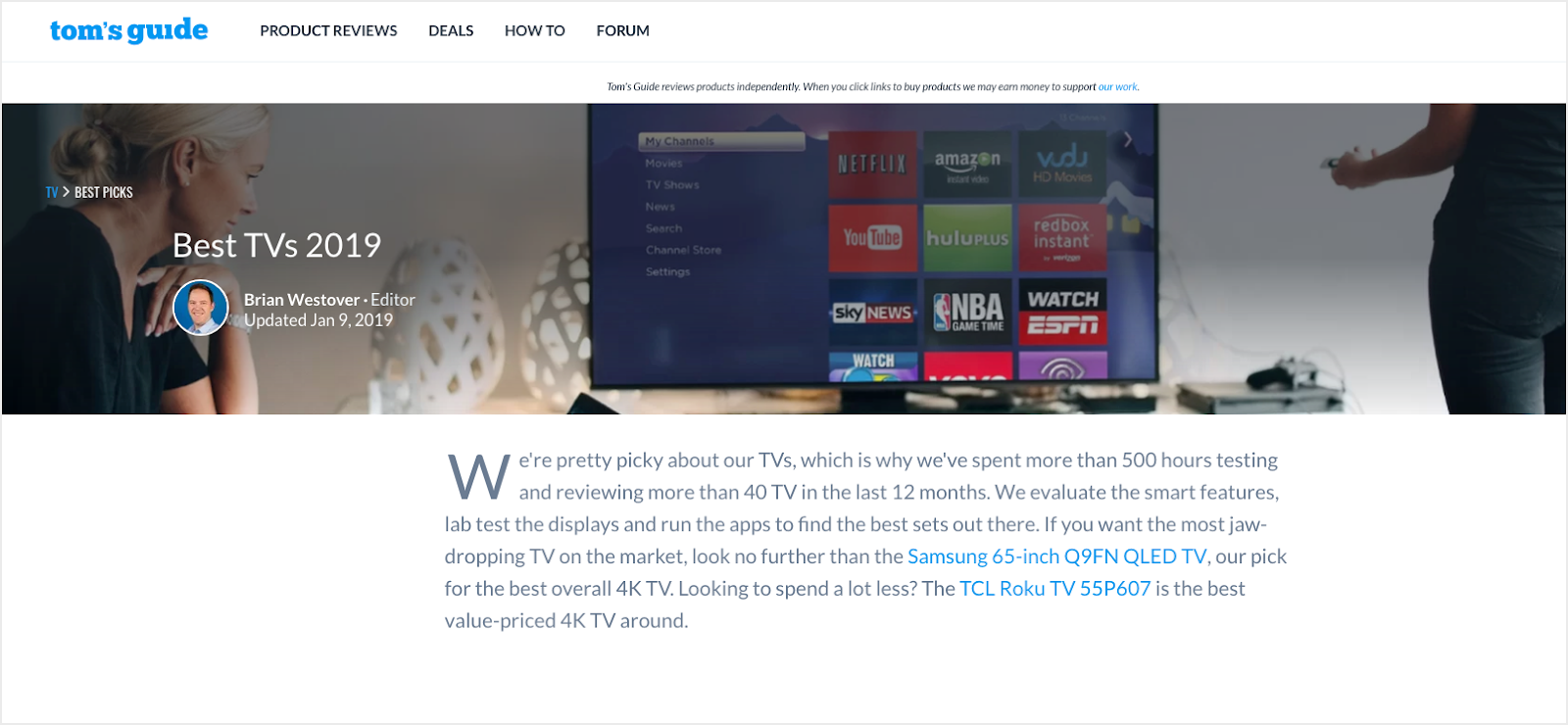
Website and Blog like Toms guide for Online Business

Read more about starting a blog here.

SEO

SEO stands for Search Engine Optimization, and it refers to the rules you need to comply with if you want to get your online business at the top of search engine results.

For instance, you need to make sure that your website loads fast and it’s easy to navigate. Your content needs to be relevant and informative, and your images should add value to your articles. And that’s just scratching the surface of a successful SEO strategy.

Read more about getting started with SEO here.

SEM

SEM, or Search Engine Marketing, is a form of paid advertising that you can use to promote your brand and boost its visibility in search engine results. Google AdWords is one of the most popular and profitable forms of SEM.

SEM for Online Business

Email Marketing

Email marketing might be as old as the internet, but it doesn’t mean it’s an outdated marketing technique. On the contrary! With an ROI of 122%, email marketing is one of the most effective strategies you can employ to grow your online business. That’s because it’s a line of communication that feels a lot more personal than pay-per-click advertising, for instance.

You can send discounts or special offers via email, or simply use this medium to nurture your prospects with helpful content. Be careful, though, not to overdo it, and only send content that’s relevant to your audience.

Social Media Marketing

Facebook, Twitter, Instagram, LinkedIn, Pinterest, and Snapchat – it can be difficult to figure out on which social media platform to focus. What you need to remember is that the trendiest channels might not always suit your business, so pick wisely.

Instead of wasting time and resources on Instagram, for example, focus on LinkedIn if you are trying to attract a B2B audience. Or if you operate a women’s fashion brand, don’t forget about Pinterest. Also, make sure to engage with your prospects and start conversations about topics that might interest them – don’t just “post and hope”.

Read more about using social media marketing for your online business here.

Influencer Marketing

An influencer is someone with the collective ear of a large audience that is a group of potential buyers in your market. Typically, the influencer has cultivated a large following on social media. Sometimes, they may have a huge blog following, or an engaged, lengthy email list.

Influencer Marketing for Online Business

Influencer marketing isn’t anything new. Celebrity endorsements represent a widely spread marketing tactic. The beauty of online influencers, though, is that they can dress their content up to make it look natural. More often than not, people think that the message is a recommendation from a person whose lifestyle they admire rather than an advertisement.

Read more about getting started with influencer marketing here.

Partnerships

In any situation, a partner means having the ability to share responsibilities and rewards. In the world of online business and marketing, it’s generally the same.

There is a form of understanding between the two parties about the responsibilities each of them has. For instance, a tire manufacturer can partner with an online eCommerce store and have their products featured on their partner’s website.

It’s a great way of sharing the load and achieving meaningful business growth, as long as you find partners that are relevant to your niche.

Content Marketing

Content marketing focuses on the creation and distribution of relevant and valuable content, with the purpose of attracting a clearly-defined audience, building a long-term relationship with them and, ultimately, turning them into loyal customers. Done well, content marketing brings all of these other tactics together as one. It integrates SEO, email, paid advertising, social media, influencers, and relevant partnerships to build long-term content assets for your online business and reduce your cost per acquisition.
Content Marketing for Online BusinessRead more about getting started with content marketing here.

Back to contents.

How do you start an online business?

Learning the steps to building an online business is one thing. Taking the plunge and putting them into action is a completely different story.

Here are a few tips that can help you have a better understanding of how your online business should look:

Step 1: Decide on a niche

In this overly competitive world, generic businesses don’t have much of a chance. That’s why it’s paramount to differentiate yourself from your competitors and offer something new and unique to your audience. In other words, you need to find a niche.

Try to determine if there’s a specific need out there that you can address and leverage to your advantage. Don’t be too vague, though. If you try to be everything to everyone, you may end up being overlooked through complexity. Market to your 1,000 TRUE fans and the rest will sort itself out.

One example of a SaaS platform that targets a fairly narrow niche is email marketing software ConvertKit, who focus all of their marketing and copy on “creators”:

Decide on a niche like ConvertKit for Online Business

Step 2: Pick a revenue model and marketing approach

When it comes to marketing approaches, it’s possible to combine a few and make it work. However, remember that you’re just starting out. Fast results require a significant investment, and you might not have the necessary funds if you are just getting started. Pick the approach you’re most comfortable with at the moment; then as you grow, you can expand your marketing strategy.

As for the revenue approach, you’ll need to look at which of them suit your products and services, and which is the easiest to adopt and maintain based on the resources you have. A membership model may seem like a simple model to adapt, but do you offer the right service for it?

Step 3: Generate website traffic

Here is a constant you’ll need to focus on: bringing people to your website. It’s the key to growing a steady and loyal online customer base.

Website traffic is the lifeblood of any online business. Without traffic, you won’t make sales – it’s as simple as that.

Yes, not everyone that ends up on your page will give you a call or buy from you. But the more people you bring in the better the chance of converting them into customers.

Read more about everything to do with website traffic here.

Step 4: Convert visitors into customers

Getting prospects to click on an ad or read your blog posts is one thing. Persuading them to take action and subscribe or buy from you requires a lot of know-how and finesse. You need to show them your products are an excellent choice among the hundreds of other spending alternatives they have available at any one moment.

The science of monitoring your website metrics and improving them to convert more visitors into customers is known as conversion rate optimization. You’d be surprised at how influential a small change can be to your website when it comes to converting visitors into customers.

Keep track of every move you make. The more data you gather the better you can adapt and optimize your performance. Check your traffic stats, bounce rate, purchase percentage, and any other metrics that can help you get a sense of whether your efforts are working.

If you don’t know what works and what doesn’t, then there’s no way to know how to improve. Look at the data you’ve gathered on a regular basis. You don’t have to do it every day but set periodic goals, especially right after a significant ad campaign or promotion.

See what generated results. Sometimes, an idea might seem great on paper but will fall short when you implement it. And that’s no reason to panic; it’s a lesson to learn from.

Read more about getting started with conversion rate optimization here.

Back to contents.

Trending business ideas in 2019

The beauty of the online world is that everyone can follow their dreams. But some dreams are more realistic than others.

Some business trends are making more waves than others in 2019, either because they’re targeting a niche that’s been massively ignored so far, or are hopping on new technologies which will be soon introduced.

Regardless, you can expect to see more of these businesses in the future:

1. Virtual Reality (VR)

Virtual reality is all anyone can talk about at the moment. And it makes sense since it’s an exciting new form of technology that can be applied to various industries (like gaming, medical, or educational).

Beyond the hardware associated with VR experiences (such as Facebook’s Oculus range), this technology opens up a whole new industry of business opportunities. For advertisers, service providers, and much much more!

Virtual Reality (VR) for Online Business

2. Children’s Education

There’s a big market for parents looking for tutors for their children on various subjects, such as music or languages. Whether you advertise your services online or are an actual online tutor, parents turn to these forms of online services since they cost less than they would at an educational institution.

An example of this trend can be seen in the Apple App Store with the popular learning app Wizard School:

Children’s Education like Wizard School for Online Business

3. Counseling and Therapy

Counseling “on the go” has been gaining traction in recent years, and it is sure to continue to rise. The idea behind it is to give people the opportunity to get professional advice even if they are not in a psychologist’s office.

It’s relatively easy to set it up, and you can combine this model with the traditional, face-to-face therapy to expand your services.

Talkspace is an example of an online business leading the charge in this space:

Counseling and Therapy like Talkspace for Online Business

Back to contents.

Wrapping up

There you have it, an overview on how to successfully launch your online business. Is it a risk? Yes. Is it worth it? Definitely.

As long as you have a tight business plan and lay out exactly what it is you want to achieve from your online business, you’ll be fine.

The post How To Start An Online Business In 2019 (Plus The Best Online Business Ideas) appeared first on Jeffbullas’s Blog.


Read Full Article: http://bathseoexpert.tumblr.com/post/182735931781