Tuesday, December 26, 2017

5 Tips To Help You Nail The Music For Your Next Marketing Video

5 Tips To Help You Nail The Music For Your Next Marketing Video

No video production is complete without audio. But just having regular audio can seem a little hollow and lifeless – and that’s where music can step in to fill the gap.

Music can set the tone of a video and make it more memorable for your audience. To be blunt, it can transform an otherwise dry or hollow video into a living, breathing thing.

That means choosing the right music for your marketing videos is incredibly important. Here are five tips to follow to get the most out of your musical selection.

1. Think about your brand’s voice

Music has to suit the mood of your video, otherwise, it will become disruptive. The tone of your video may be moody, dramatic, exciting, or educational and informative. The music may need to be jaunty, inspiring or calming. And the music may need to shift throughout the video.

But it isn’t all about the video itself; it’s also about furthering your branding. Your brand’s voice needs to be pervasive throughout the marketing video. Whether your company’s brand is youthful and energetic or luxurious and relaxing, it’s going to have to have an impact on your musical selection.

Your brand’s voice is probably uniquely appealing to your demographic so choose music that suits it. There are very few things that define a demographic as clearly as the music that they listen to. Those in the 20-year-old demographic will be accustomed to vastly different types of music than the 40-year-old demographic. This can be used as guidance on your musical selection.

2. Find music that isn’t overly distracting

Music is primarily used to set the tone of a video piece – it should rarely be the focus of it. Music that has overly dramatic swells or sudden drops need to be carefully planned around. Though it can be used to great effect, you need to ensure it doesn’t start competing with your visuals. You also want to avoid any dissonance, whereby the music does not match the activity on the screen.

As a general rule of thumb, most music in marketing videos can easily fade into the background; though the audience does notice it, they may not be focusing on it. The music in videos is often pretty simple and usually reduced to tones and instruments rather than voices and lyrics. But it’s important to note that this is just a guideline: there can be times when you need music that may be more noticeable and abrupt.

There are huge repositories of music that has been specifically designed for commercials, infomercials, tutorials and other video projects. These pieces of music are most likely to be able to cleanly loop and avoid any harsh or noticeable sounds.

3. Keep your eye on quality

Just like audio, music can be high-quality or low-quality. And just like video, the format of the music isn’t necessarily going to tell you a lot – so you should always source music from a high-quality and reputable source.

Listen to audio samples with a pair of headphones in a quiet room. What you’re looking for are audio artifacts: clicks, buzzing, reverb, and dulled sounds. Good quality audio should be crisp and clear, regardless of how it’s being listened to and how loud it is being played.

Professional audio quality is critical to a professional production. Quality issues that are virtually unnoticeable on your personal device or on your computer could become extremely noticeable in other formats, such as high-definition speaker systems. It can be extremely frustrating to deal with low-quality sound in post-production – and it can cost a lot of money and time to do so.

4. Try to tell a story

Most videos have a certain narrative – even a simple video is likely to have an introduction and a conclusion. When selecting music, you want to find a few different pieces of music that are going to tell a story alongside your video. Intro and outro videos, in particular, are going to be used for drawing the customer in and creating a memorable experience at the end.

Think about your musical selection as an additional actor within your production. Musical cues, for instance, are commonly used to increase the impact of actions in a video. Music may shift upwards in tempo as someone gets into a car, or it may slow down to a gentle cascade as someone on the screen goes to sleep.

Always remember that music can even abruptly shift the tone of a scene, even if the scene itself hasn’t changed at all.

5. Don’t forget about budget licensing issues

At this point, you should have a shortlist of four or five pieces of music that will be ideal for your production. You don’t want to put all of your eggs in one basket, because if you do… you could run into licensing issues. Every video production has a certain asset, and within that asset, you’re going to need a specific budget for audio.

Artists establish their own licenses for their work. Depending on the artist, these licenses can be fairly restrictive or extremely lenient. Before making a final decision, you need to check on the licensing costs – paying close attention to how exactly you can use the music, for how long you can use it, in what media you can use it, and how much it will cost.

Using licensed music may significantly narrow down your options, but it will also make your choice much easier. You’ll likely find that some of your options are going to be far more affordable and high-quality than others. There are plenty of royalty-free options on sites such as PremiumBeat and AudioJungle that are great quality and won’t break the bank.

Wrapping up

As you can see, the process of selecting music for a video is far from simple. In fact, it can be a little overwhelming. Take a systematic approach and pay attention to the five tips above.

Also bear in mind that sometimes it’s easier to just work with a professional video company who have many years’ experience in this area. When working with a professional video company, you can send in clips of music that you like to your video producers. They will then find suitable audio that’s high quality enough for your production – and be able to sync it into your video in a compelling way.

Guest Author: Joe Forte is the co-owner and producer of D-Mak Productions, a video production company based in Phoenix, Arizona.

The post 5 Tips To Help You Nail The Music For Your Next Marketing Video appeared first on Jeffbullas’s Blog.


Read Full Article: http://bathseoexpert.tumblr.com/post/168962868081

Unsolicited Advice: How to Avoid 4 Content Marketing Blunders

unsolicited-advice-blunders

Have you hit that moment in the holiday season yet?

You know, when the fairy dust has settled to the floor next to bits of dried pine needles, crumbs of joyously consumed (now vaguely regretted) treats, and the hair of the dog that may or may not have bitten you (but almost certainly needs a walk).

I tend to get that bah-humbug feeling a couple of days before the new year brightens things again. If there’s one thing that never fails to cheer me, though, it’s unsolicited advice.

Or, rather, Unsolicited Advice, the whip-smart (and unfailingly polite) commentary on marketing missteps Andrew Davis provides in every issue of Chief Content Officer magazine. (You can give yourself that gift for free anytime by subscribing. It’s free.)

Don’t be surprised if you find yourself nodding along and smiling as you read these letters – even if you’ve made similar content gaffes. We’ve all been there. Andrew (with guest advisor Becky Montchal in one case) offers such useful suggestions; you’ll be glad for the tips.

Whether you wanted them or not.

Don’t turn off half your potential audience (some of us shave, too)

Adam Weber

Chief Marketing Officer

Dollar Shave Club

Becky and I have a suggestion: Cash in on the millions of women buying Dollar Shave Club products by creating a separate set of post-purchase content that speaks to the fairer sex’s trials and tribulations.

There’s a lot to love about Dollar Shave Club. Your male-oriented content is wonderfully produced, and we adore your brand personality and tone. (The mini magazines you tuck inside each shipment are entertaining and informative.) And we appreciate that your subscription service has helped us reduce our razor costs and given us the confidence to bear our hair-free faces, backs, and legs.

dollar-shave-club

Once you win over a female buyer, however, the relationship turns sour. With email subject lines such as “Here’s How to Manscape Your Butt” and “This Is Why Your Pee Sometimes Comes out at an Angle,” Becky has reached her limit. She’s unsubscribed.

It’s clear you and your team understand how to create great content … but how about customizing some of that creatively snarky content for women? Why not ask the gender of the buyer at sign-up? Then you can quickly and easily segment your email communication. Want to take it a step further? How about creating two mini magazines each month, one for men and one for women? (Becky would love some tips on how to stop the bleeding when she nicks her ankles.)

Here’s the deal, if you segment your list and commit to creating content for the other half of your target market, both Becky and I will write one article to kick-start your content engine. (Oh, and we’ll also re-subscribe.)


.@aweb44 How about customizing some of that creatively snarky content for women?@b_montchal @drewdavishere.
Click To Tweet


What do you say? Do we have a deal?

Whether you wanted it or not,

Andrew Davis and Becky Montchal (November 2017)

Do be so dramatic (spoiler alert: avoid headlines that …)

Prasid Pathak

Director of Marketing

Codecademy

Dear Mr. Pathak,

Your video testimonial about Tommy Nicholas on the Codecademy website explains how just in a few months, Nicholas was able to create a revenue-generating website called … but the story is missing one essential ingredient to transform it from mediocre to Coffitivity magnificent: drama.

Don’t get me wrong; Nicholas’ story is astonishing. After founding Coffitivity, Nicholas launched Knox Payments, which lets merchants accept payments directly from customers’ bank accounts. The video about his career highlights is well shot and edited. It’s simple, short, and to the point. It’s also nice to see the impact a platform like Codecademy can have on someone’s life. But I think you could do better.

You’re not the only one whose testimonial video builds no suspense. In fact, lack of drama is the most common mistake marketers make when demonstrating the impact their product or service has on their clients and customers.

So let’s fix it.

Even the title of that video, “How Tommy Nicholas Transformed his Career With Codecademy,” tells me the ending before I hit play. Let’s rename it. Consider taking a line straight out of Nicholas’ mouth: “Wow, Coding Is Magic! The Story of Tommy Nicholas.” See the difference?

But don’t stop there. If his story had a real beginning, middle, and end, it would inspire people to sit up and watch. Answering some simple questions would elevate Nicholas’ story. What was he doing before he joined Codecademy? What struggles did he face in his career before he wrote those first lines of code? Were there moments of doubt or high conflict? With suspense, Nicholas’ story would be transformed.

Here’s the deal: If you want to rework Nicholas’ testimonial, I’ll spend the time to rework the script with you. We’ll add some drama and build some suspense.


.@prasid: If you want to rework Nicholas’ testimonial to add some drama, I’ll help you, says @drewdavishere.
Click To Tweet


What do you say? Do we have a deal?

Whether you wanted it or not,

Andrew Davis (August 2017)

Shake your differentiators (why you shouldn’t hide the world’s largest peanut)

Mr. Kevin Langston

Deputy Commissioner

Georgia Department of Economic Development

Dear Mr. Langston,

I’m planning a trip to Macon, Georgia. As I browsed ExploreGeorgia.org looking for travel ideas, I realized Georgia doesn’t look all that different from South Carolina, North Carolina, Virginia, Alabama, Tennessee, Mississippi, Louisiana, and a whole host of other places I’ve visited.

explore-georgia

But I’ve been to Georgia (more than once) and I love it. Georgia IS different. It IS unique. It’s just that the images you use and the videos you share make Georgia look like thousands of other places I’ve toured.

Stop telling me you’re different. Start showing me.

Everyone has great sunsets and gorgeous hiking spots. Great restaurants, wonderful waterfalls, and beautiful beaches are commodities. When I visit Georgia, I want to experience the places and people that I won’t find anywhere else in the world. I want to share the videos and pictures of places that are truly yours.

The fact is, when you market to everyone, you attract no one.

Why not highlight the attractions no one else in the world can offer? Like the world’s largest peanut in Ashburn, Georgia. How about some action shots of the world’s longest zip line? Or a video highlighting the rare opportunity to cave fish in Catoosa County? (I’d love to see what the Southern Cavefish looks like!) All of these things are extremely unique.


#Tourism Marketing Tip: Highlight attractions no one else in the world can offer, says @drewdavishere.
Click To Tweet


Here’s the good news: You’re not the only state that does this. Every office of travel and tourism markets the very same way. Georgia isn’t a commodity. It’s a gem. Let’s show the world.

Here’s the deal, if you show me why Macon, Georgia, is different than any other town in the world, I’ll tell everyone.

What do you say? Do we have a deal?

Whether you wanted it or not,

Andrew Davis (June 2017)

You’re doing it wrong: Content marketing pitching edition (it’s not about you yet)

Account Managers

Content Marketing Agencies Everywhere

Dear Account Managers,

Watching three dozen agency pitch meetings over the last two years, I have noticed one common problem: Your pitch decks are too long. Which means your meetings are too long; 45 minutes too long to be exact.

I love your content marketing enthusiasm; I adore the creative concepts you pitch. You are obviously good at what you do and believe in your pitch wholeheartedly. I get it. You know your stuff.

Here’s the thing: I don’t care about any of that … yet.

Most pitches I attend spell out what the agency will do for us during the last 15 minutes of the meeting. The first 40 minutes are filled talking about amazing case studies and teaching us the value of content marketing. The agency team members talk about who they are and what exactly they do. They show off their client list, talk about their “unique “approach and even discuss their “patent-pending” process. The presenters do all of this before they tell us what they can do for us.

Maybe you should invert your pitch. What if you took the last 25% of your presentation and made it the first 25%? What if you told us exactly how you can help us before telling us who you are, what you do, how you do it, and for whom you have done it? What if your pitch is for us first so I care about you second?

Here’s the deal: If you would like to invert your pitch but aren’t exactly sure how to do it, give me a call. I will schedule a 30-minute phone call to help you (and your agency) try a new format. I guarantee your next prospect will thank you!

What do you say? Do we have a deal?

Whether you wanted it or not,

Andrew Davis (April 2017)

What’s on your mind?

For most of us, there’s at least one topic that brings out the content marketing equivalent of Miss Manners in you. What’s yours?

To get more Unsolicited Advice from Andrew, subscribe to CCO, our free quarterly magazine. 

Cover image by Joseph Kalinowski/Content Marketing Institute

The post Unsolicited Advice: How to Avoid 4 Content Marketing Blunders appeared first on Content Marketing Institute.

Monday, December 25, 2017

5 Ways to Increase Engagement With Your Target Audience

A Year Full of ‘No Way!?’ Moments for CCO Magazine

no-way-moments-cco-magazine

2017 will go down as the year contributors to the magazine repeatedly blew my mind.

Most editors like to think they have at least a modest (if not better) grasp of the industry they cover. After all, to be a good editor you must be able to tease out the ideas that will educate or delight your readers most – and identifying those requires a baseline of subject matter expertise.

This year was different. At least a half dozen CCO articles in 2017 inspired an exclamation I can only describe as “No sh*t?!,” but for the purposes of this article, I’ll refer to as “No way?!”

Read on to learn about all the amazing contributors and ideas of the past year that blew my mind or delighted me.

Virtual reality and a sit-down with author of The Martian (February 2017)

We started the year interviewing virtual-reality expert Sarah Hill, CEO and chief storyteller for StoryUP, the article titled Immersive Content. No longer the domain of ultra-early adopters and video gamers, virtual reality and augmented reality took off in 2017 … and Sarah was the perfect guide, helping us understand the possibilities and limitations of VR and AR. She also offered case studies from brands using VR, a welcome moment for those of us unable to visualize applications for VR outside of the gaming and consumer entertainment realm.


The world is no longer flat. The internet is fast becoming a place you step inside. @sarahmidmo #virtualreality
Click To Tweet


Also in February, I was delighted to interview Andy Weir, author of The Martian. We talked in Las Vegas just before his touching keynote talk at the ICC conference. Andy spoke poignantly about the deep challenges of being a full-time creative, and the lessons marketers may learn from his own journey. Among other nuggets of wisdom, he explained that marketers focus too much on the sale and, in doing so, lose sight of the power of a well-told story.


Marketers focus too much on sale. They lose sight of power of well-told story, says @andyweirauthor.
Click To Tweet


He explained, “Audiences are extremely aware of preachiness, especially in the modern era. Hollywood has decided that everything has to have some freaking political message, which drives me crazy. The Martian, by the way, had no political message. Dude didn’t want to die … that’s it. People quickly, even if they don’t do it consciously, identify the message, get mildly annoyed at it, and then start ignoring the parts of the movie that push that. That’s why I try to avoid it. Instead, find the interesting part of your story and then work towards the message, rather than desperately starting with the message and trying to work towards the interesting part.”

Making sense of AI, plus ideas about hiring (April 2017)

Paul Roetzer’s article about the rise of AI-powered content marketing (Cognitive Content Marketing) lit up my brain with possibilities.


.@PaulRoetzer’s plain-English tour of AI in marketing lit up my brain, says @soloportfolio.
Click To Tweet


Paul’s plain-English tour of the categories of AI in marketing, and possible on-ramps for timid marketers to consider, was one of my key “no way?!” moments of 2017. If it’s a topic that interests you, I also recommend watching his session from Content Marketing Word (Machine-Assisted Narrative: How to Transform and Scale Your B2B Content With Artificial Intelligence), which is available on demand. Paul did a fantastic job explaining AI in terms even non-technophiles can understand. He also gave us a tour of the most promising technologies in the field, and how marketers are using each.

Also in April, we heard from Sara Noble, a Boston-based search consultant who helps iconic brands hire elite content marketing executives (Are You Ready to Hire Quality?). She said among her first tasks when she speaks to a potential hiring company is to figure out if they are serious about content – and thus worth consideration by top-flight talent. If you’re ready to a hire a high-value content marketing leader, look through her list of questions to ensure that your team and company are truly in a position to benefit from a big investment in top talent.


Excellent #content creators do not come cheap, says Sara Noble via @soloportfolio.
Click To Tweet


How data influences story (June 2017)

Some people have been amazing resources to the magazine over the years – people who keep coming back with great ideas, stories, and people. (Cameron Conaway, Andy Vale, and Kirk Cheyfitz … I’m looking at you.)

In that spirit, Andy brought us a “no way?!” story (Data-Driven Creative). Andy interviewed Fred Graver, a four-time Emmy-winning television producer and former head of Twitter TV, who uses social data to influence his screenwriting. Yes, it sounds kind of dystopian, but using analytics to influence creative is an interesting premise and process. And it’s an idea that is here to stay, given our inevitable future of AI-enhanced human creativity.


TV audiences are vocal on @Twitter, allowing for substantial research & building creative, via @AndyVale.
Click To Tweet


Also fun to read in the June issue – the interview with Jennifer Watson from The Weather Channel (How The Weather Channel Does Social Media). Most social media managers are hyper-aware of publishing accurate, appropriate social content online, but in Jennifer’s work accuracy can be a life-or-death situation. For a weather nerd like myself, it was a dream come true to speak to Jennifer and peer into her daily life.


.@weatherchannel has meteorologists on #socialmedia team to ensure accuracy, says @JWatson_Wx.
Click To Tweet


ge-hey-girl-valentines-day

Inspiration from the content maven at GE (August 2017)

GE’s social media personality has long been a favorite of mine. And my all-time favorite campaign from GE: its play on the Hey Girl meme for Valentine’s Day, but instead of Ryan Gosling, Thomas Edison is the flirt.

The company makes it look easy, but bringing that voice and personality to a brand as big and iconic as GE is a huge challenge (How GE Gives Recruiting Content a Personality Lift). Chief Marketing Officer Linda Boff said the key is in knowing what human values the brand stands for. She explained, “Our DNA is innovation, technology, research and manufacturing. It’s something we have all fallen in love with at GE. That’s our guiding light. We never try to pretend something we’re not.”

A lot of companies could name the same values as GE does, but what makes GE’s execution of those values special is the way it transforms them into a human personality. Boff said, “We often talk about showing up as a person would versus how a corporation would. How do you do that? With humor. A wink. A twist.”


Establish a brand voice that’s inherently human & relatable to your audience. @lindaboff #recruiting
Click To Tweet


Also in August, an article from one of my favorite CCO contributors, Kirk Cheyfitz (How Advertising is Killing the WWW). Kirk has long railed against the overreaches of advertising and how poor behavior by advertisers will ruin online marketing for the rest of us. Kirk is such an elegant writer that the article is worth reading if only to see how a masterful creative unpacks a complex topic. Also keep an eye out for his Guide to Digital Decency and Success in the same piece.


Digital advertising’s many deadly sins have generated a plague of problems for everybody, says @KirkCheyfitz.
Click To Tweet


A Voice Revolution Caps the Year (November 2017)

Finally, in November we published one of my all-time favorite articles of all time. (That sentence just triggered our blog editor.) (Note from editor: Yes, the sentence made me clutch my pearls, but I kept it just this once for writer authenticity.)

Britney Muller from Moz explained the “no way?!” effect of voice assistants on SEO. Of course, I heard rumblings of how voice search would transform SEO, but Britney patiently explained it in a way that all marketers could understand. It’s possibly my favorite article of the year simply because of how much I learned.

And, for giggles, read Andrew Davis’ column, in which he uttered the words, How to Manscape Your Butt  (though to be fair, he was quoting someone else). Andrew and his guest columnist, Becky Montchal, call out Dollar Shave Club for excluding half of the world’s population in its shave-related content marketing.

Make sure you don’t miss any of the no-way moments in 2018. Subscribe to the free print edition (yes, it will arrive in your mailbox) today.

Cover image by Joseph Kalinowski/Content Marketing Institute

The post A Year Full of ‘No Way!?’ Moments for CCO Magazine appeared first on Content Marketing Institute.

Friday, December 22, 2017

15 Top Websites to Find Free Images For Your Content Marketing

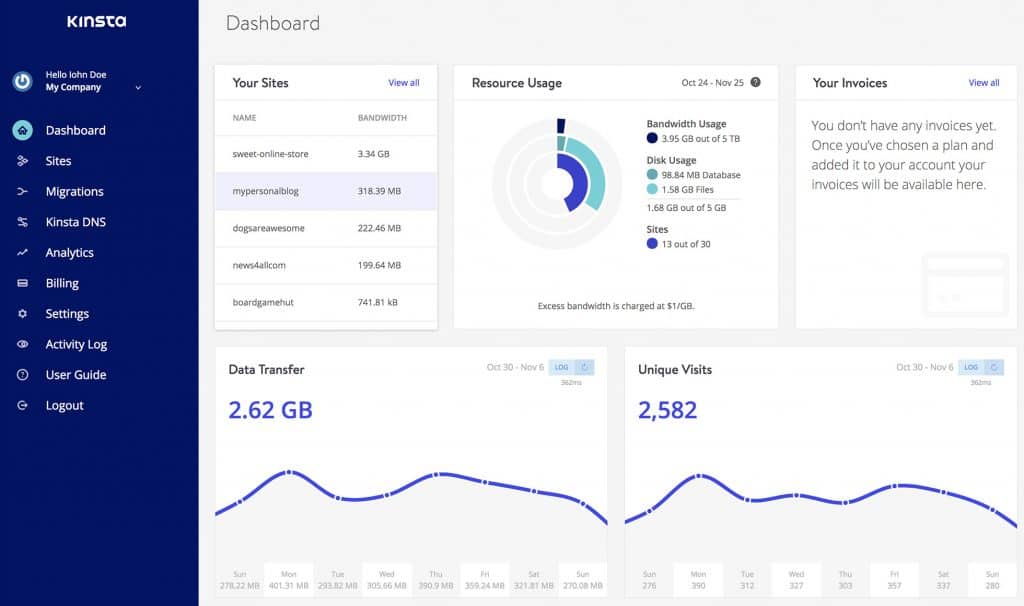
Need to Host a WordPress Site? Check Out Kinsta

Have you ever tried to deal with most web hosting companies’ customer service? That experience alone is enough to scare you away from those company for good.

Seriously, it can be that frustrating!

If you own a website, you know how frustrating it is when your server goes down and you are forced to sit on hold for over an hour.

It is that frustrating experience that motivates me to always keep looking for hosting companies that provide top quality service. Recently I discovered Kinsta

So, what is Kinsta?

Good question. They are a highly reputable hosting and support company that work exclusively with WordPress websites.

Kinsta doesn’t treat you like a number and their customer service is some of the best I’ve experienced.

The thing I like about Kinsta is that they offer their services through the premium version of the Google Cloud Platform and they are even recommended by Google Cloud themselves.

But they are more than just a web host

I was excited when I learned that the team behind Kinsta is mainly WordPress developers, the same developers that have made tons of WordPress themes, plugins, and who have troubleshooted countless problems on the platform before.

It’s that kind of expertise that helps you get your website back online when something goes wrong. And of course, having 24/7 support 365 days a year helps too!

Here’s another thing good about Kinsta

Other companies will often just throw your website up on any server and call it a day. This isn’t how Kinsta does it.

They let you choose which data center you want to have your website hosted on.

Look at these amazing choices:
-Council Bluffs, Iowa, USA
-St. Ghislain, Belgium
-Changhua County, Taiwan
-Sydney, Australia
-The Dalles, Oregon, USA
-Ashburn, Virginia, USA
-Moncks Corner, South Carolina, USA
-São Paulo, Brazil
-London, UK
-Frankfurt, Germany
-Jurong West, Singapore
-Tokyo, Japan
-Mumbai, India

You’ll never have to worry about slow speeds because you are in direct control of where your website is hosted, meaning you get localized speeds that are backed by Google themselves.

And in the case where something does go wrong, who do you trust more to get your hardware back online? The Google Cloud!

The answer is easy

I’m not a tech guy, but when they told me that my individual WordPress website was being hosted in its isolated container, that sounded good. They told me that they used LXD managed hosts and LXC software, but honestly, that kind of terminology was beyond my paygrade.

The thing that sold me was that I was being provided a dedicated service that was 100% private. I didn’t have to worry about my customer’s data being leaked because my server will be secure.

Sounds good, right? What’s the catch?

You do have to pay for Kinsta. They offer tiered plans starting at $30 a month for smaller websites.
The other plans include:

$60 per month for 2 installs, 40,000 visits, 6GB of storage, and a free SSL & CDN
$100 per month for 3 installs, 100,000 visits, 10GB of storage, and a free SSL & CDN
$200 per month for 10 installs, 250,000 visits, 20GB of storage, and a free SSL & CDN
$300 per month for 20 installs, 400,000 visits, 30GB of storage, and a free SSL & CDN
$400 per month for 40 installs, 600,000 visits, 40GB of storage, and a free SSL & CDN
$600 per month for 60 installs, 1,000,000 visits, 80GB of storage, and a free SSL & CDN
$900 per month for 80 installs, 1,500,000 visits, 120 GB of storage, and a free SSL & CDN

Their plans may seem pricey, especially if you are a smaller business. I get that. But $30 a month for a smaller website is fair if the hosting is top notch, and upgrading to a larger plan takes a few clicks to do.

My Verdict – 5/5

Don’t penny pinch and settle for a budget host. When you do, you get a budget host and that will hurt your website.
Your website needs to be online 24/7, especially if you are selling products. Pay a few extra dollars to get a quality host.

I give Kinsta a 5/5 because of their reliability and dedication to the WordPress platform.

Original post: Need to Host a WordPress Site? Check Out Kinsta


This post is courtesy of: https://www.dailyblogtips.com

Why Your Retargeting Strategy Is Losing You Customers (And What To Do About It)

Why Your Retargeting Strategy Is Losing You Customers (And What To Do About It)

If someone visits your product page but doesn’t purchase, or visits your email opt-in page and doesn’t complete the form, you’ve probably lost the opportunity to acquire them as a customer – unless you use retargeting.

Retargeting is a powerful tool used for reconnecting with people who’ve visited your website, but who haven’t converted.

In a study of landing pages, the average conversion rate was found to be 2.35%. If this is your conversion rate, that means 97.65% percent of your traffic can be re-engaged using a retargeting campaign.

If someone doesn’t convert on the first visit to your site – it doesn’t mean they aren’t interested, it may mean that they’re just not interested at the moment and need more convincing.

For example, I often find that younger demographics convert well on retargeting campaigns at the beginning of the month – since this is when they’ve just got paid.

Likewise, if a visitor arrives on your site late at night, they might not be in a purchasing mood, but if they receive a retargeting ad the following afternoon – they’re more likely to convert.

When performed correctly, retargeting campaigns can dramatically lower the cost of acquiring customers. In fact, research shows that retargeted customers are 70% more likely to finish a sale compared to customers who arrive as cold traffic.

Despite the lure of cheap acquisitions, there are many ways to get retargeting wrong and lose customers. Here are some of the most common mistakes.

No designated landing page

This mistake isn’t specific to retargeting, but it’s important to mention because it applies to all PPC advertising.

I do a lot of market research for my clients to determine how their competitors are running paid advertising and I’m constantly shocked by how many companies are sending paid traffic to their homepages.

If someone has clicked your retargeting ad, it means they’re interested in the specific offer – not your business in general (sorry for the tough love).

Please don’t send them to your homepage and force them to search for the product in your ad. Make it as easy as possible by sending them to a unique optimized landing page with a clear call-to-action (CTA) for every campaign.

Your landing page doesn’t need to be flashy, it just has to communicate your offer and allow people to convert easily.

Lack of harmony between ad and landing page

Creating a designated landing page for your retargeting campaign isn’t enough. You also need to think about user experience.

When someone sees a retargeting ad, they expect a consistent experience when they click through to your landing page.

As a good example, check out this ad image by Zendesk:

Then observe the consistency when you click through to the landing page:

If your ad features a neutral color scheme and friendly, conversational copy – sending them to a landing page full of high octane sales copy and bright flashing colors is not a good idea.

Your ad and landing page should match, both aesthetically and in terms of the tone of voice.

Consider this: if you pasted your Facebook ad onto your landing page, would it look harmonious or awkward? If the answer is the latter, it’s worth going back to the drawing board until you get it right.

No audience segments

Retargeting is a precision marketing tool. Think of it as a laser beam instead of a shotgun.

The more you’re able to speak directly to your target customer, the more effective your campaigns will be.

For instance, you may want to design a retargeting campaign for people who have read a piece of content about a subject, and you want to promote a contextually relevant product.

This individual would resonate with a different message compared to someone who has viewed a product, added it to their cart but abandoned the purchase.

For audiences that have shown high buyer intent (such as adding a product to their cart), you can to be more direct with your messaging.

Finally, retargeting can be used to connect with existing customers who’ve already purchased from you, but who haven’t purchased your upsell. In these instances, it’s best to take a friendly approach and greet them as an old friend who might be interested in something new.

You can make huge inferences based on the data for how people have engaged with your site. Building audience segments allow you to deliver more impactful, personalized retargeting campaigns.

Spamming existing customers

In order to recapture leads who have visited your product page but who haven’t converted, I recommend building a custom audience in Facebook ads manager.

Add everyone who has viewed your product page URL in the last 30-180 days (you will need to install the Facebook Pixel to do this).

When you fire off a retargeting campaign to this audience, you can easily recapture lost leads.

However, when building your audience you also need to remove people who have viewed the URL of your thank you page.

If you don’t, then existing customers will continue to receive your retargeting ad for a product they’ve already bought. This can get extremely annoying quickly, especially if your retargeting audience is small.

Too much selling, not enough value

If you come across like a blatant advertiser trying to extract value from your audience, you won’t have much luck with retargeting.

Particularly for Facebook retargeting where people are scrolling through their feed looking for interesting pictures and updates from friends – it can be unpleasant when you come across an ad that is an overt sales pitch.

I recommend you test this for yourself, but I find the best retargeting ads blend seamlessly into a person’s feed. For instance, ad images where people are using your product in a social scenario tend to work better than traditional ecommerce pictures with a product and white background.

This ad image by MoveGB looks like a typical organic post from a friend that’s interested in fitness:

The best retargeting ads speak to a person’s self-interests. In other words, they deliver (rather than extract) value.

In a study on cart abandonment, 49.3% of online shoppers stay that they abandon purchases when the price is too high. Consider including a discount code in your retargeting ads to combat this problem, and mention that the offer is only available for a limited time (leveraging the power of scarcity).

Here is a good example of a scarcity-based discount ad by Target:

Hopefully, you know your target customer intimately (if not, then why not?). Consider how you can solve their frustrations, help them achieve their goals and generally add more value to your retargeting campaigns.

Not rotating your ads

If you’ve run numerous retargeting campaigns, you’ve probably had the experience of achieving great results at the beginning of the campaign – shortly followed by a drastic decline.

The reason for this is ad fatigue. In Facebook ads manager, you can view your conversions alongside your ad frequency (the average amount of times your ad has been shown to someone in your audience) – usually, there is a correlation.

When someone views an ad multiple times, they stop processing it entirely. In the earlier days of internet marketing, this was known as banner blindness.

If you have a small retargeting audience, everyone is going to see your ad in a short period of time (depending on your daily budget). The longer you run the campaign, the higher the likelihood that people will become fatigued.

The best way to combat this is by including multiple ad creatives in your ad set. When your ads rotate, it diminishes the chance of someone seeing the same ad numerous times in quick succession.

With Google Adwords, it’s easy to set a frequency cap so that your ad isn’t shown repeatedly to someone who isn’t going to purchase. Frequency capping can be found in ‘settings’ for your campaign.

Sometimes, a customer is a good match for your product but they simply don’t resonate with your offer.

Rotating your ads allows you to convey multiple offers in order to encourage a click through. For instance, one offer may emphasize the way a product can impact someone’s life, while another offer emphasizes free shipping.

Summary

Despite the power of retargeting, it still isn’t a widely used tactic. In fact, 46% of marketing professionals believe that retargeting is the world’s most underused marketing technology.

Retargeting is a great way to drive cheap conversions, but only if you execute correctly.

When planning your retargeting campaigns, the best thing to do is put yourself in the shoes of your ideal customer. Through this lense, consider whether your advertising would be annoying or valuable.

Are you spamming your website visitors in order to extract as much money from them as possible, or are you carefully taking steps to deliver value and improve their lives?

If your product or service isn’t highly valuable to your audience, then no amount of tinkering with retargeting campaigns will solve your problem. In this case, it’s best to survey your audience and find out about their frustrations and desires so that you can serve them better.

As with all forms of marketing, the winners are those who deliver what the market actually desires. Retargeting is no exception.

Do you have any tips for executing an effective retargeting campaign? Please let me know in the comments.

Guest Author: Aaron Agius is an experienced search, content and social marketer. He has worked with some of the world’s largest and most recognized brands, including Salesforce, Coca-Cola, Target and others, to build their online presence. See more from Aaron at Louder Online, his blogFacebookTwitterGoogle+ and LinkedIn.

The post Why Your Retargeting Strategy Is Losing You Customers (And What To Do About It) appeared first on Jeffbullas’s Blog.


Read Full Article: http://bathseoexpert.tumblr.com/post/168822223691